Which generation of the Passport is right for you?
With thousands of vehicles in our inventory, we’re here to help make car research easier for you. We’ve partnered with car-review experts from Edmunds to weigh in on what matters most when you’re looking to buy a truck or car.
***
The Honda Passport is the brand's midsize two-row SUV. Think of it as the more rugged sibling to the Honda Pilot, but with one fewer row of seats. The ideal Passport driver is someone who doesn't need a third row in their SUV, appreciates the added cargo space, and may want to do some light off-roading.
The 2026 model year kicked off the fourth generation (body style) of the Passport, replacing the previous Passport that ran from 2019 to 2025. This new model brought back the boxier styling of the past, an improved powertrain, the latest technology features, and a more composed ride on- and off-road. But are these changes enough to swing you toward spending more for the latest design, or is the tried-and-true third generation the way to go?
Third-Generation Honda Passport (2019-2025) Basics
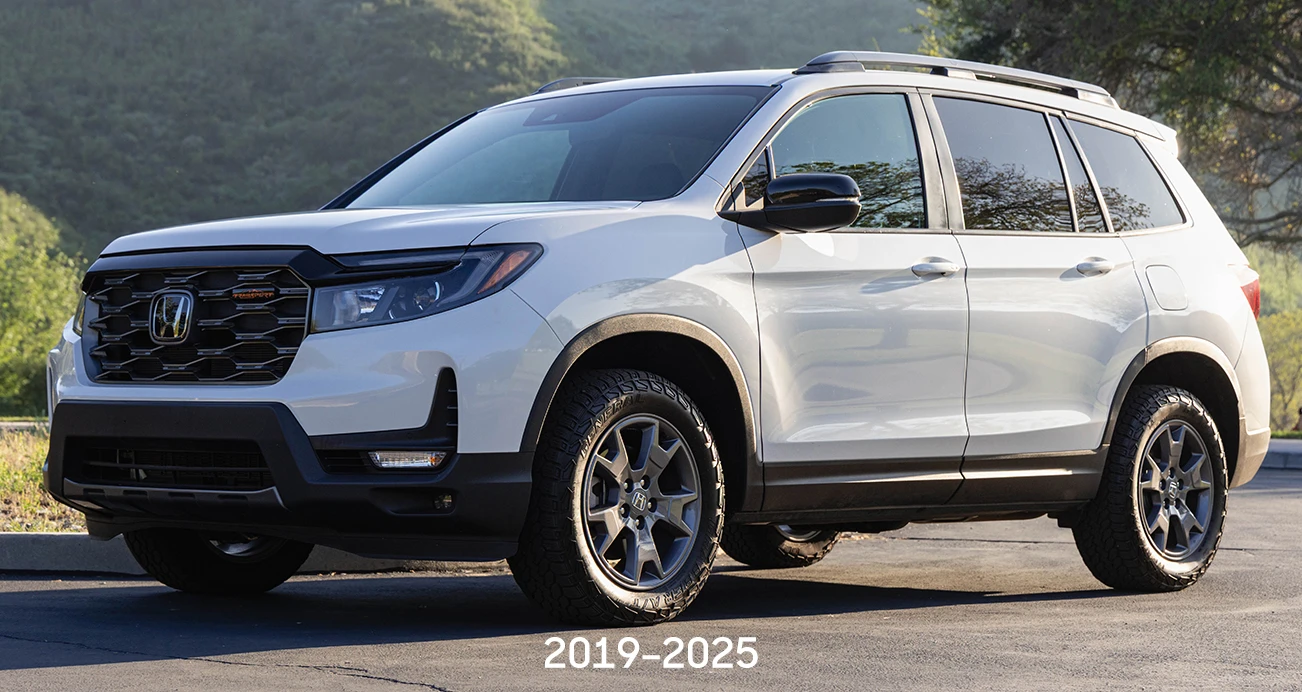
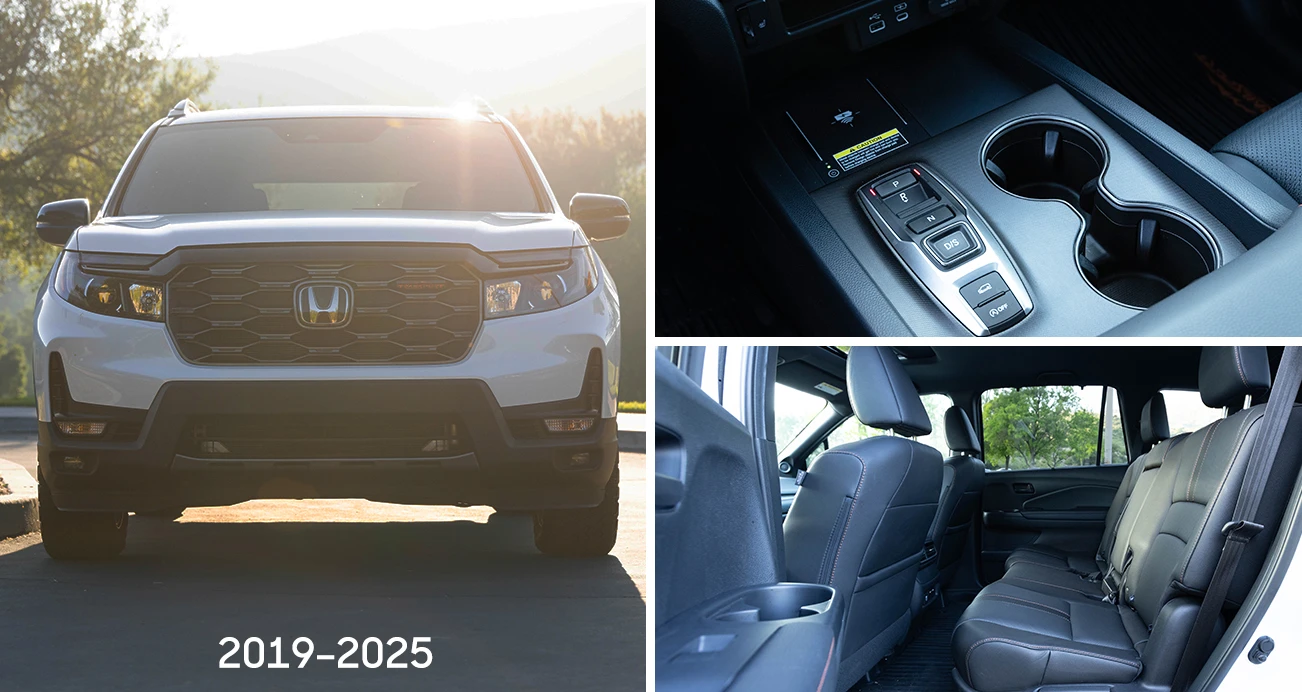
Honda introduced the third-generation Passport for the 2019 model year, after a 16-year hiatus from the previous model. And where the second-generation Passport shared parts with an Isuzu SUV, this third generation was Honda's own design, sharing its underpinnings with the Honda Pilot. As such, the Passport's styling was more rounded and closely resembled that of the Pilot. If this is a deal-breaker, don't write off this Passport yet because it gets a more distinctive, rugged look for the 2022 model year.
The third-generation Passport was powered by a 280-horsepower 3.5-liter V6, paired with a nine-speed automatic transmission. That engine gives it up to 5,000 pounds of towing capability when properly equipped and strong acceleration in day-to-day driving. Front-wheel drive was standard initially on lower trim levels, while all-wheel drive was optional or standard on higher trims, until it became standard across the board in 2023. Apple CarPlay® was initially available on EX-L and higher trim levels and became standard across all trims for the 2021 model year. That same year, all Passport trims gained an eight-inch touchscreen, replacing the five-inch unit previously found on the lower trims.
Fourth-Generation Honda Passport (2026-Present) Basics
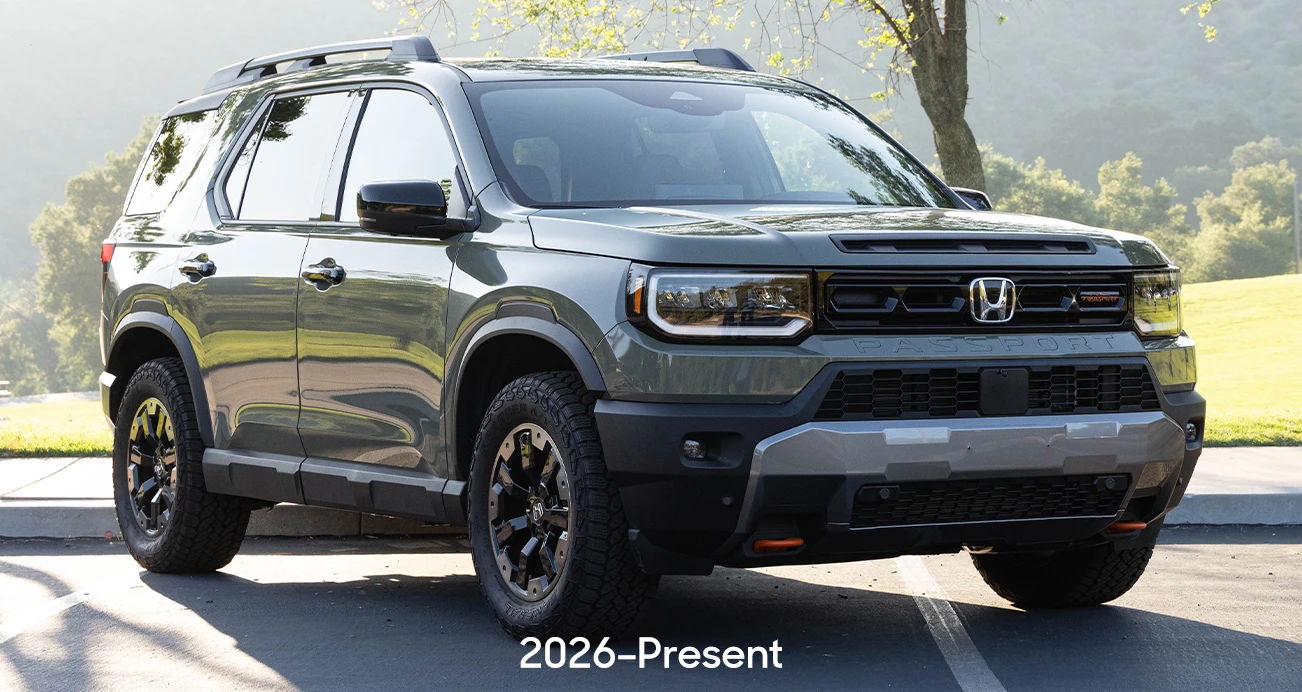
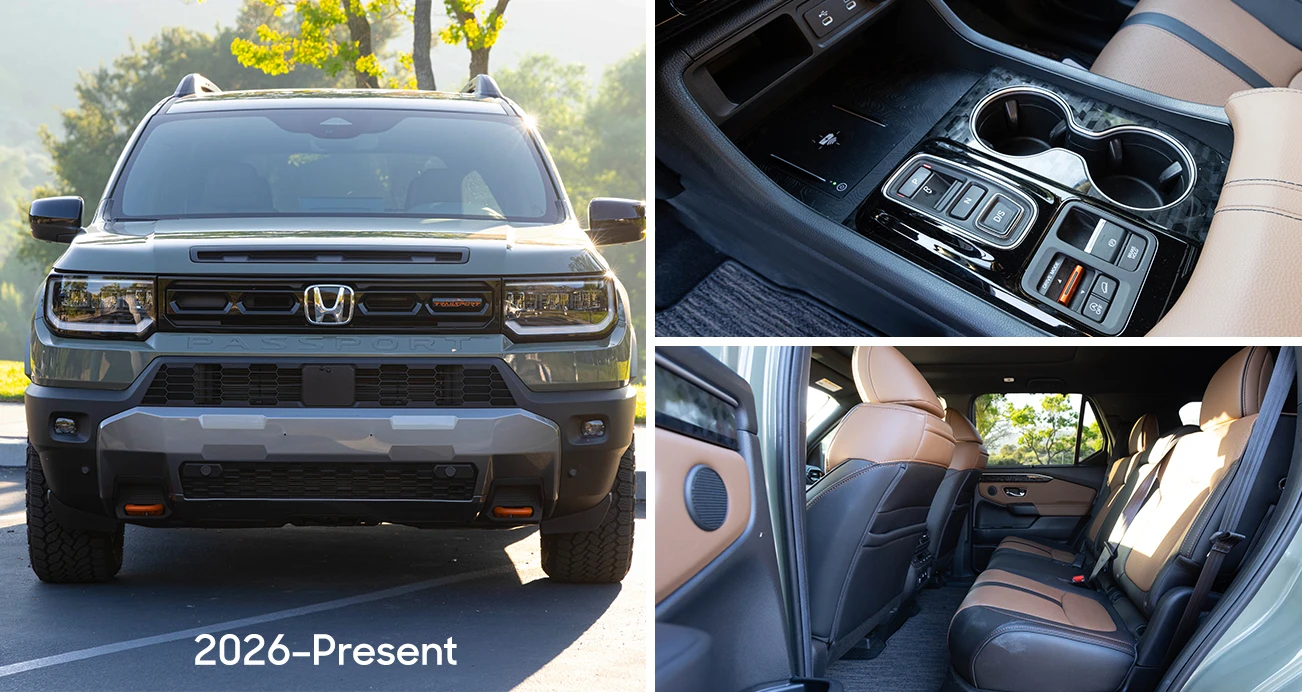
The fourth-generation Passport marked a return to form to the boxy styling of the past. The overall dimensions are slightly larger, and it sits taller than the prior Passport. Inside, there's a much larger 12.3-inch touchscreen that comes standard on all trims and features not only Apple CarPlay® (now wireless), but also a Google-based operating system that uses Google Maps for navigation and the smarter Google voice assistant.
Honda says its latest Passport features an all-new engine, and while that might be true, on paper, there are many similarities. It is a 3.5-liter V6 engine (like the last Passport), it makes 285 horsepower (up from 280 hp) and the exact same 262 lb-ft of torque. One slight difference is that this engine is paired with a new 10-speed transmission. All-wheel drive comes standard on all models. The 5,000-pound maximum towing capacity remains the same as before.
For the fourth generation, Honda leaned more into off-road capability. The four different TrailSport trims feature upgraded suspensions, off-road tires, recovery hooks, and underbody shields to protect vital components from rocks and other debris on trails. To be clear, the Passport is still a light-duty off-roader, but it all gives drivers more confidence when the going gets bumpy.
Passport Gen 3 vs. Passport Gen 4
In a battle between old and new, which Passport comes out on top? Let's look at some of the key categories.
Engines
While the fourth-generation Passport makes a touch more power, the reality is you're not going to feel that five-horsepower difference in the real world. Similarly, the new Passport has an extra transmission gear, but this is another aspect that most people won't notice, although the 10-speed tends to have smoother shifts. Both Passports have the same maximum towing rating, unless you're looking at a two-wheel drive (FWD) third-generation model, in which towing capacity drops to 3,500 pounds.
Since the engines are roughly the same, it's not surprising that their fuel economy is nearly identical. You'll see an EPA-estimated 21 mpg in combined driving on both old and new Passports. The exceptions are the FWD third-generation Passport, which gets a slightly better 22 mpg combined, and the fourth-generation Passport in TrailSport trim, which gets a lower 20 mpg average due to its off-road-focused equipment.
Ronald's take
This one is essentially a draw. If you're really keen to spot the differences, I recommend you test-drive both to make up your own mind. Otherwise, let the other categories here guide your decision.
Passengers and cargo
Both Passport generations seat five, and the cabins are roughly the same size, so this comes down to which seats you find more comfortable. Edmunds has owned and driven both the third- and fourth-generation Passports for over a year. In both cases, the front seats earned high praise, but the fourth-generation Passport's rear seats had the edge in comfort.
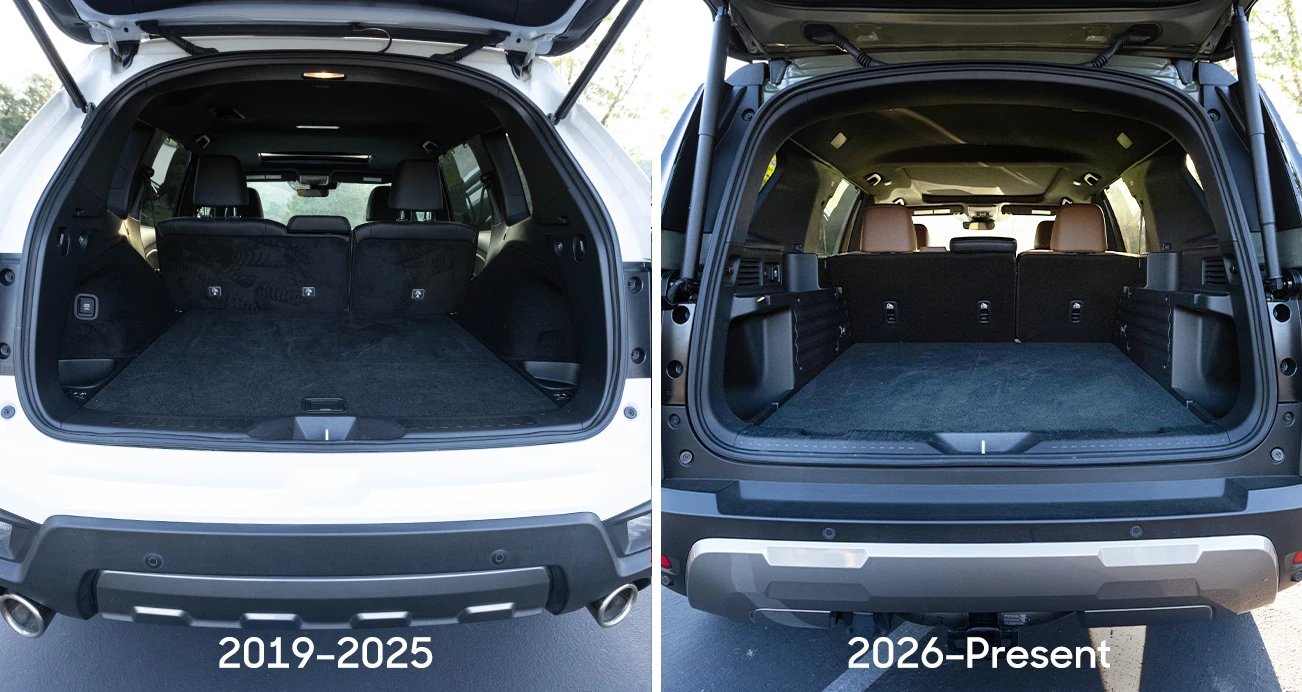
The fourth-generation Passport has greater cargo space than the outgoing model. Assuming you've folded down the second row of seats, the new Passport has 83.8 cubic feet of cargo space, compared to 77.7 cubic feet in the third generation.
Ronald's take
If you regularly carry passengers in the back seats or want more cargo space, the fourth-gen Passport is the winner here.
Interior and tech
The interior and tech of the third-generation Passport are a mixed bag. On the one hand, several Edmunds editors praised the premium stereo's sound quality, but on the other hand, the infotainment system felt dated, even when it was new. The driver-assistance features on this Passport frustrated some of our editors: One noted that the forward collision warning system issued several false alarms, while another thought that the adaptive cruise control was too jerky when slowing and then took too long to get back up to speed.
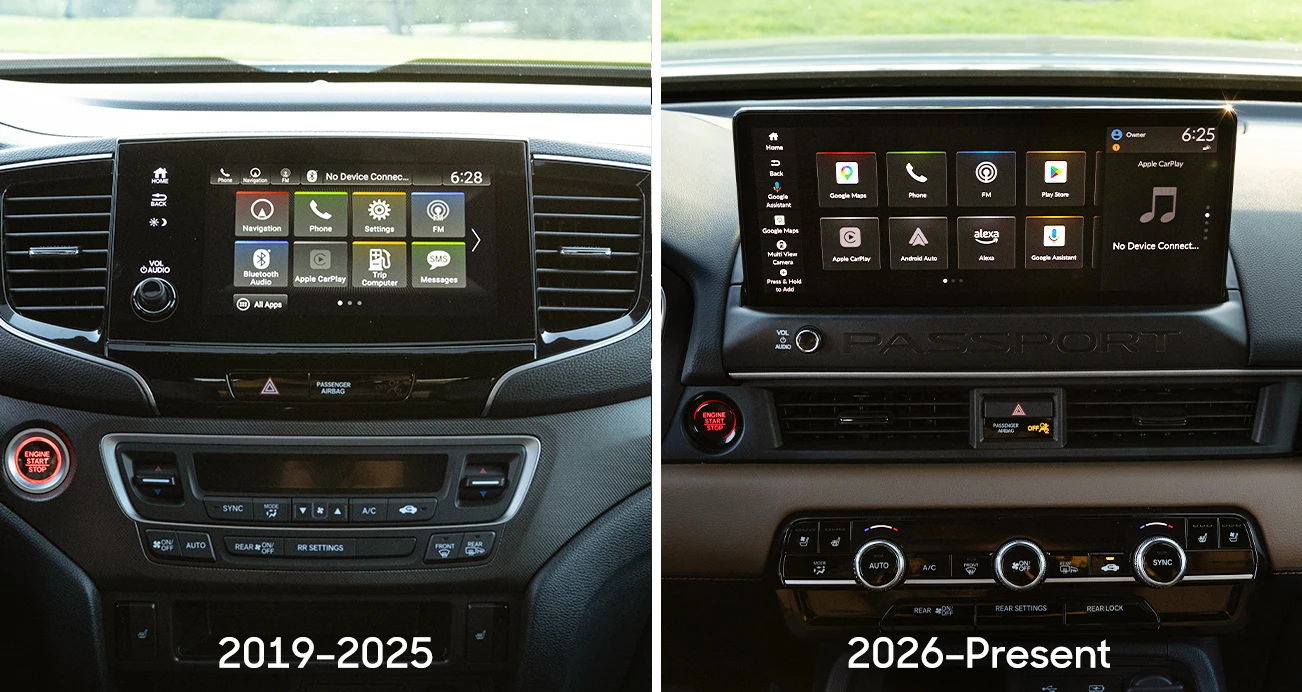
On the fourth-generation Passport, not only do you get a much larger screen, but also the operating system is more intuitive because it is powered by Google, and its navigation system feels more like the maps you're used to seeing on your smartphone. The annoyances with the driver aids from the previous-generation Passport were nonexistent, according to Edmunds' testers. As for the overall layout of the interior, it's clean and classy, with a surprisingly upscale vibe. As is typical for Honda, controls are easy to find and use, and things like climate control use physical buttons, rather than cramming everything into the touchscreen.
In both cases, you'll find a push-button gear selector in place of a traditional shift lever. This takes some getting used to, but it isn't a deal-breaker by any means.
Ronald's take
I realize that looks are subjective, but the fourth-generation Passport's interior looks noticeably better to me. I also appreciate the larger screen, as it's a good enough size without looking like someone glued a tablet to the dashboard. Finally, I believe the Google-based infotainment system will age better over time. When you combine all that with more consistent driver aids, it's an easy win for the fourth-gen Passport.
What are your must-haves for a midsize SUV?
This might seem like a slam dunk for the fourth-generation Passport, but here's why you might still want the third generation.
Do you care about having the latest technology? Do you routinely max out the cargo area of your SUV and need an extra 6.1 cubic feet of space? Are you going to notice the loss of five horsepower? If the answer is no to many of these questions, the third-generation Passport gets you 80% of the way in terms of functionality and also saves you from spending more on a car.
But if you do prioritize the latest tech and the newest body style, the fourth-generation Passport is the way to go and the SUV I'd choose if I were in this situation.

Ronald Montoya has worked in the automotive industry since 2008, writing hundreds of car-shopping articles on topics ranging from buying, selling, leasing, electric vehicles, maintenance, and more. He has also worked at multiple car dealerships and has bought and sold over 100 vehicles. Ronald is a senior writer at Edmunds, where he brings his passion for cars and finds ways to distill that knowledge to the average shopper.