Which compact SUV is the better daily driver for most people?
With thousands of vehicles in our inventory, we’re here to help make car research easier for you. We’ve partnered with car-review experts from Edmunds to weigh in on what matters most when you’re looking to buy a truck or car.
**
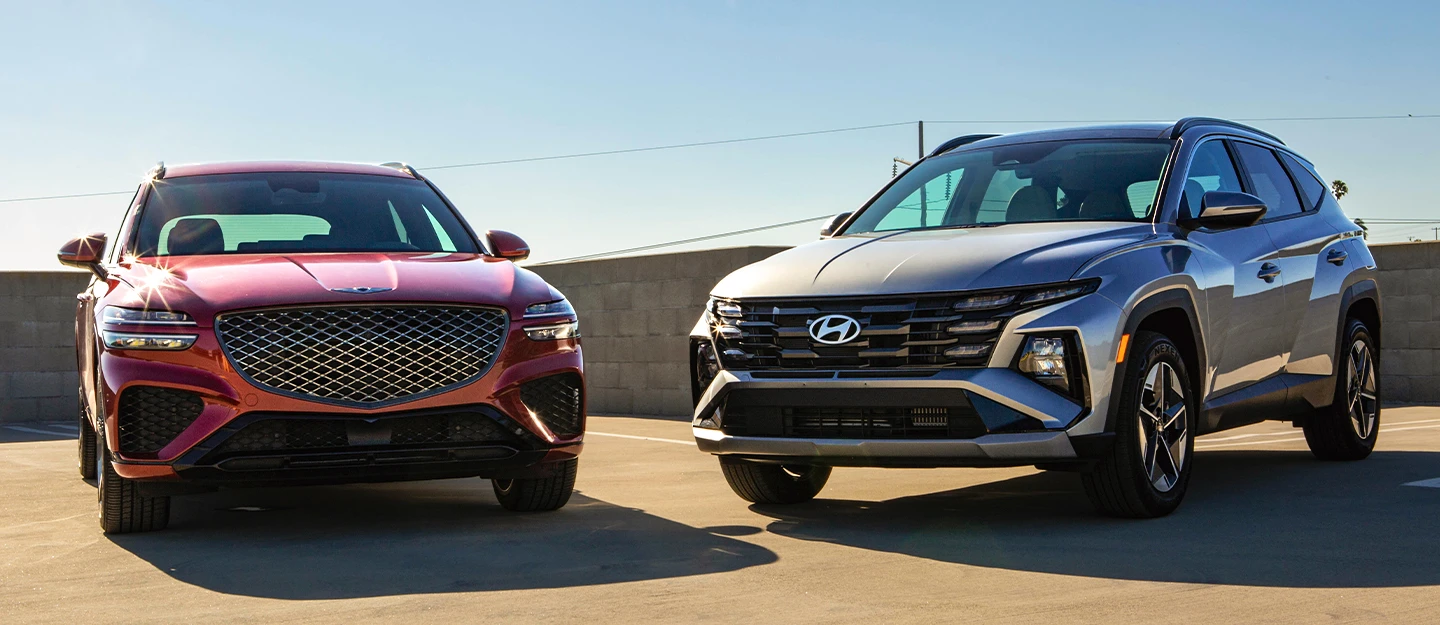
Are you searching for a compact SUV that offers a lot of bang for the buck in terms of features and engine options? If so, the Hyundai Tucson, particularly in its hybrid variant, should be near the top of your shopping list. In fact, Edmunds has ranked it the No. 1 small SUV on sale today. That said, its looks can be polarizing to some, and those who are turned off might be left wanting something with more style and personality.
May we suggest the Genesis GV70 as an alternative? This similarly sized luxury-class South Korean SUV has distinctive styling, upscale interior appointments, and a pair of powerful engines to choose from. You do have to pay extra for these amenities, roughly $10,000 on average, but this puts you behind the wheel of a unique luxury SUV with high-end features for much less than the German competitors.
Do you take the lower-cost, mainstream Hyundai Tucson Hybrid? Or should you stretch the budget to stand out in the crowded parking lots full of ordinary SUVs? Here we'll take a look at these two compact SUVs to see whether the low-key Hyundai or the luxury Genesis makes the better choice.
Different Compact SUV Philosophies
Although the Tucson and GV70 share a compact SUV footprint—the GV70 measures slightly longer and wider, while the Tucson stands a bit taller—they take fundamentally different approaches to meeting driver needs. Let's take a closer look at what sets these two models apart.
Hyundai Tucson Basics
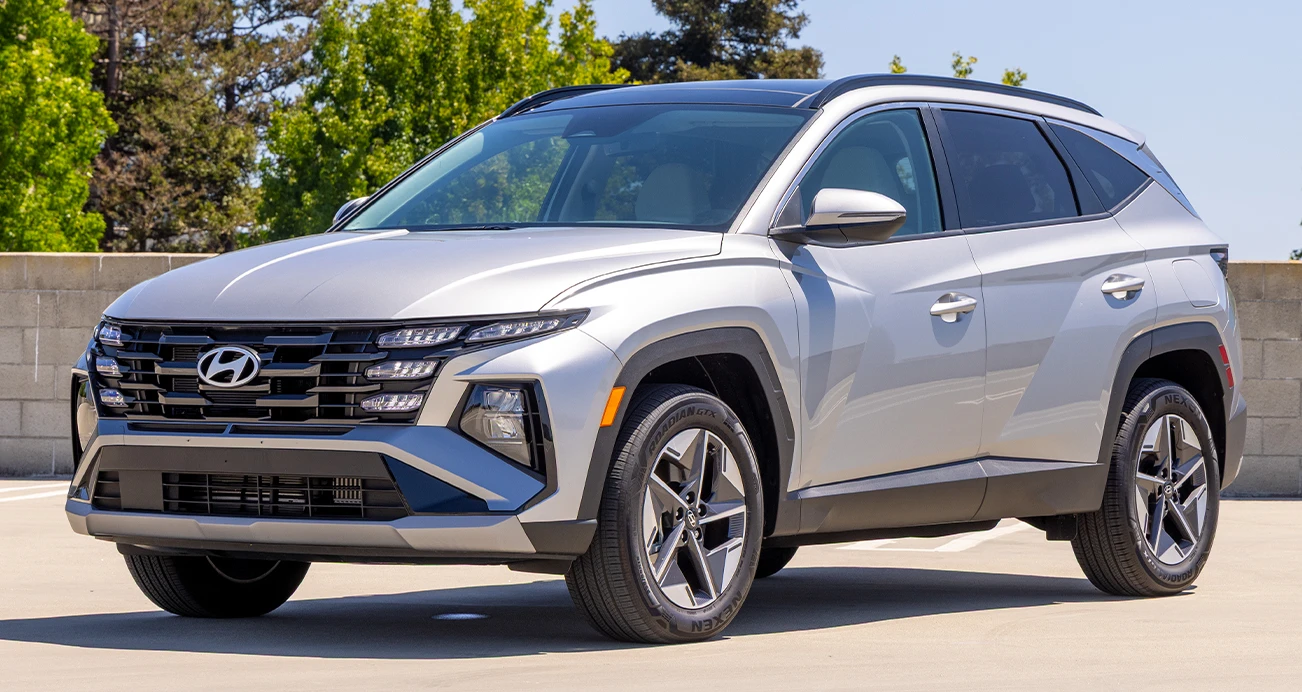
For the purposes of this comparison, we'll focus on the hybrid, as we believe it is the sweet spot in the lineup. There's also a plug-in hybrid variant, capable of an EPA-estimated 32 miles of electric range,
and a base gas-only four-cylinder Tucson engine. Both can be fine options, but in Edmunds' ratings, the Tucson Hybrid comes in first, with the Kia Sportage and Toyota RAV4 closely behind.The Tuson Hybrid comes standard with all-wheel drive and is powered by a turbocharged four-cylinder hybrid engine with smooth power delivery and excellent fuel economy. There are plenty of tech options, including standard wireless Apple CarPlay® and Android Auto™, a standard bundle of most of the driver-assist systems you'd want, a large touchscreen, and a power-operated rear liftgate.
Genesis GV70 Basics
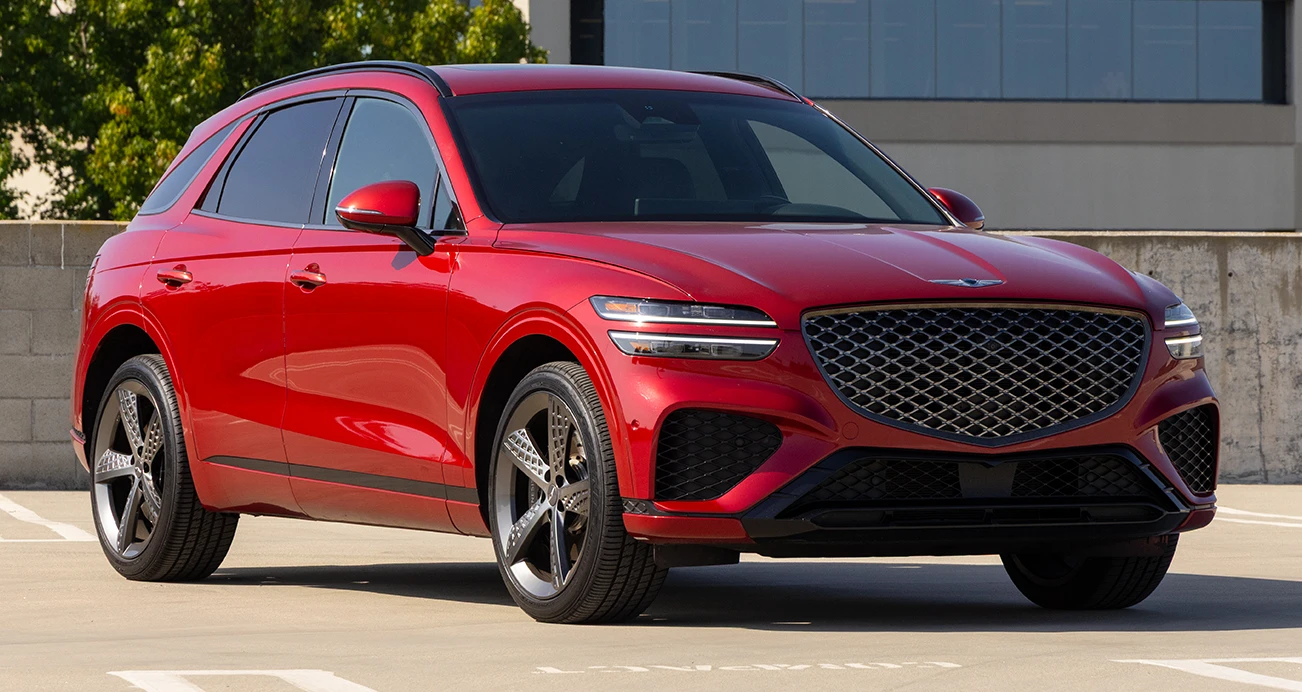
The first and only generation of the Genesis GV70 dates back to 2022, when it debuted as the brand's first luxury compact SUV. All-wheel drive is standard, and you get a choice of two powerful turbocharged engines. Inside, the GV70 takes luxury up a couple of notches. You'll find soft leather and other high-quality materials, along with seats that are both comfortable and stylish. The optional audio system can make you feel like you're in your own home theater. Like the Tucson, the GV70 also comes with a full set of advanced driver-assist features.
Head-to-Head: Hyundai Tucson vs. Genesis GV70
Engine choices: Efficiency versus power
Hyundai Tucson: The base Tucson has a 2.5-liter four-cylinder engine with 187 horsepower and an eight-speed transmission. The Tucson Hybrid combines a turbocharged gas engine and an electric motor for 231 horsepower. The plug-in hybrid is a bit more powerful, offering 261 horsepower and 258 lb-ft of torque. The hybrids come paired with a six-speed automatic transmission.
The Tucson Hybrid is the clear fuel economy champ in this comparison, with an EPA-estimated 35 mpg in mixed driving. That's a significant improvement over the estimated 26 mpg from the base Tucson engine and blows away both GV70 engines in efficiency.
Genesis GV70: Where the GV70 falls short in fuel economy, it makes up for it in power. The GV70 comes standard with a turbocharged 2.5-liter four-cylinder engine that makes 300 horsepower and 311 lb-ft of torque. For more power, there is a twin-turbo 3.5-liter V6 with 375 horsepower and 391 lb-ft of torque. Both engines use an eight-speed automatic transmission, and all-wheel drive comes standard.
But that power isn't free and will cost you at the gas pump. The four-cylinder GV70 gets an EPA-estimated 24 mpg in mixed driving, while the V6 has an EPA-estimated 20 mpg.
Ronald's take
The allure of powerful engines is strong, but another consideration is that both Genesis engines require premium fuel, which, at the time of writing, was about 90 cents more per gallon nationwide. That's a hard sell when the Tucson strikes a nice balance between power and efficiency and can get by on regular gas. Winner: Tucson Hybrid
Interior accommodations: Spaciousness versus luxury
Hyundai Tucson: The Tucson features a clean, functional interior layout. It won't be confused for a luxury car, but it's not a cheap rental-car interior either. Edmunds' testers noted too many instances of piano-black plastic throughout the cabin. This material looks nice in photos when it's brand-new, but it tends to pick up light scratches easily and is a magnet for fingerprints. The seats are plush and comfortable for long drives. Note that Hyundai updated the interior for the 2025 model year, with the restyled interior adding more room for small items, a new infotainment system, and revised interior controls. The Tucson's previous interior isn't bad by any means, but if you can manage it, keep an eye out for 2025s or newer.
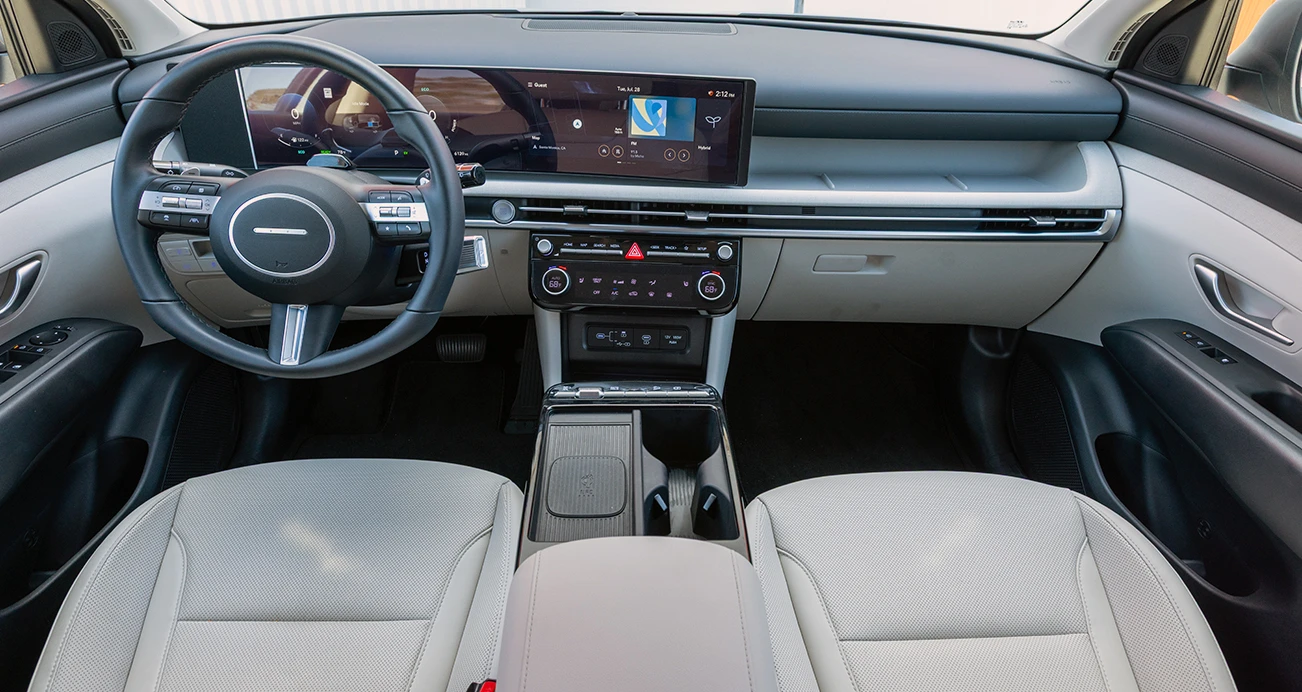
When it comes to interior space, the Tucson has the edge. It offers 38.7 cubic feet of cargo space, which nearly doubles in size when you drop the rear seats (74.8 cubic feet). Compare that to the 28.9 cubic feet of cargo space in the GV70 (56.9 cubic feet with the rear seats down). In terms of passenger space, the Tucson has just over four inches more rear legroom than the GV70.
Genesis GV70: Inside the GV70, there's a noticeable difference in the quality and variety of materials. There's more leather used throughout the cabin, and you can even get it in red. There are many brushed metal trim pieces that look better than the black plastic in the Tucson. The GV70's cabin is among the more spacious-feeling in the small luxury class. The extra-wide door openings make it easy to get in and out. We love the driving position and appreciate that Genesis makes all the main controls easily accessible for the driver. Despite the GV70's streamlined body shape, it's actually quite easy to see out of.
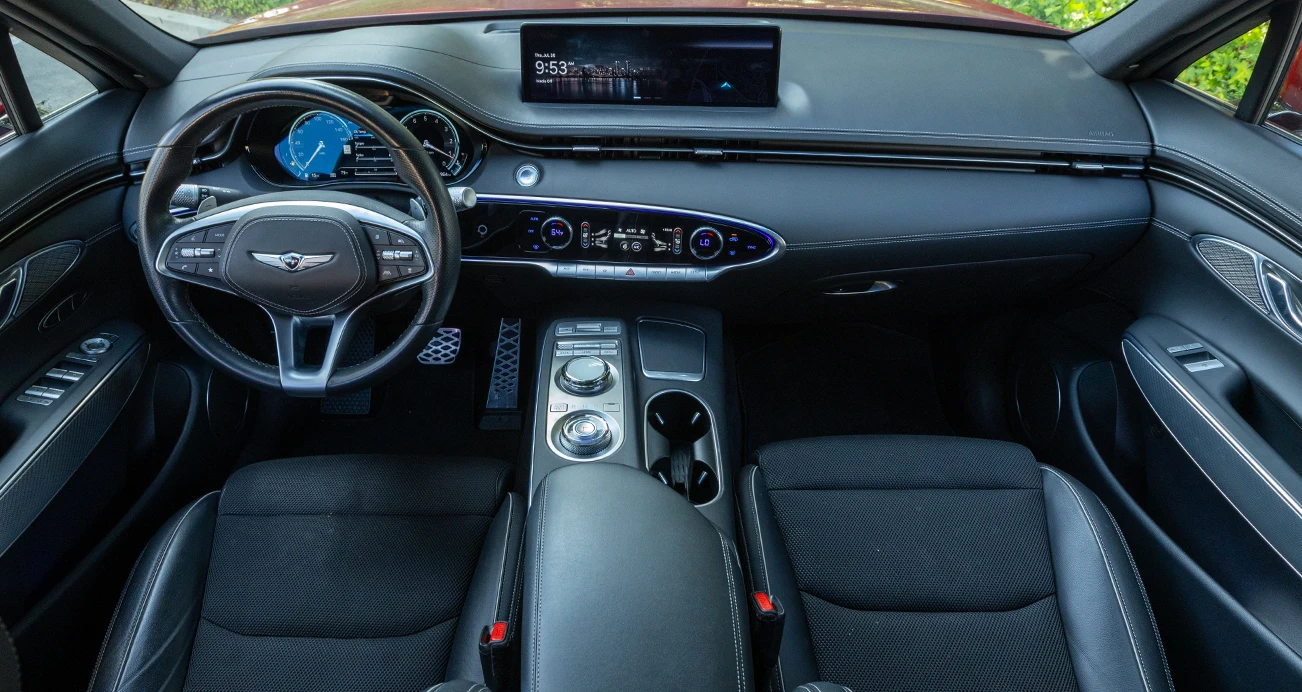
The GV70's interior stands out from the Tucson's in that it offers an alternative way to interact with the infotainment system via a rotary controller. This dial can rotate and be pressed as a button, and it has a touch-sensitive surface, making it simple to navigate the menus. However, it can be easy to confuse this dial with the similarly shaped gear selector. On the bright side, using the control knob keeps the center screen free of fingerprints, though it might take a little time to learn. If you'd rather use the touchscreen, you still can, but the screen sits a bit far from the driver, so you might have to stretch your arm to reach it.
Ronald's take
If you're buying an SUV for the "U" as in "utility," then the easy win goes to the Tucson. On the other hand, assuming you can handle the price jump, the GV70's interior is a big step up, so you're getting your money's worth. Personally, I'm a sucker for interiors that come in different colors. Additionally, with my last three vehicles having rotary control knobs, I've become a fan of them and believe they're less distracting than a touchscreen since you can use your hand to activate certain functions without taking your eyes off the road. Winner: Tucson if you need the space; GV70 if you want the nicer interior.
Technology: Closely matched
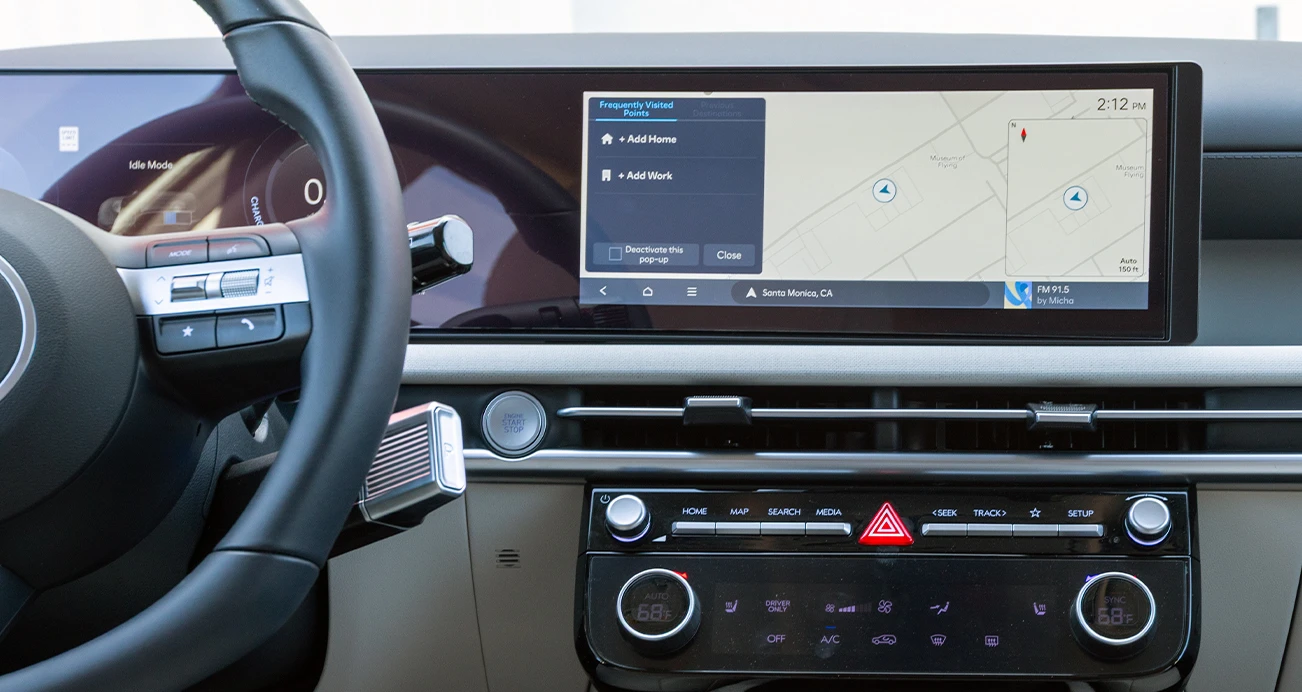
Hyundai Tucson: The Tucson Hybrid comes packed with useful tech features. The navigation system is simple to use, with clear maps and directions. The 12.3-inch touchscreen looks sharp and stays visible even in bright sunlight. Connecting your smartphone is straightforward thanks to wireless Apple CarPlay® and Android Auto™. There are plenty of high-power USB-C ports, and you can also get a wireless charging pad.
When it comes to driver aids, the Tucson comes standard with driver drowsiness detection, forward collision warning with automatic emergency braking, lane departure warning with lane centering, and adaptive cruise control. The top Limited trim gets additional features such as blind-spot and surround-view cameras, front and rear parking sensors, and rear automatic braking.
Genesis GV70: The GV70 comes with a larger 14.5-inch center touchscreen. It supports Apple CarPlay® and Android Auto™. Wireless smartphone connectivity was added in the 2025 model year, but for prior model years, you'll need to use a USB cable. On the one hand, this ensures your phone is always charged, but it is a bit less convenient. Oddly, Android uses less of the screen than Apple CarPlay® does. If you're looking at a 2026 GV70, it was updated that year with a massive 27-inch combined digital instrument cluster and infotainment display.
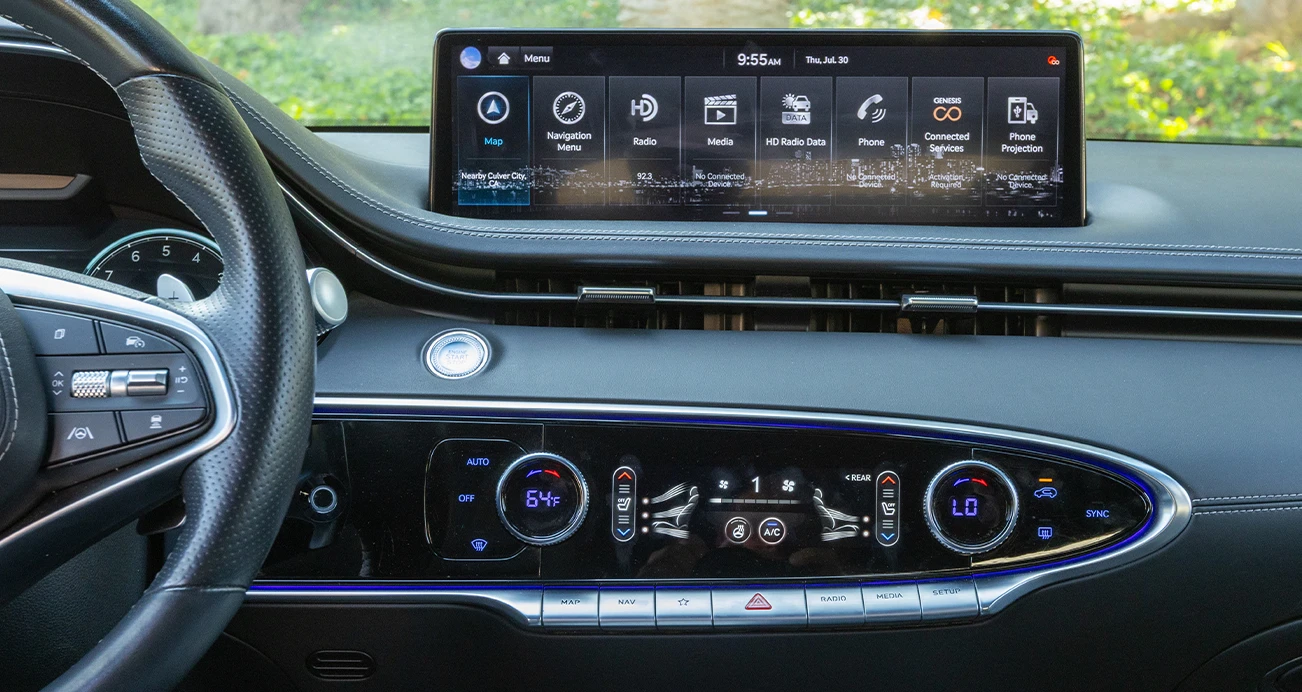
Perhaps as a testament to how well equipped the Tucson is, the GV70 has nearly the same driver aids as standard features. One small difference is that the GV70 has a rear cross-traffic warning system as standard. However, much like the Tucson, if you want the rear automatic braking feature, you'll need to go up to the Advanced trim. Once you do so, you're on par with all the features available on the Tucson's Limited trim. So what features does the GV70 offer that the Tucson doesn't? Here are a few: ambient lighting, a head-up display (unless you're looking at a 2026 Tucson), the 16-speaker Lexicon audio system we mentioned earlier, and a remote automated parking system.
Ronald's take
Getting nearly every tech and driver-assist feature you'd find in a luxury car on a mainstream SUV for thousands less is what we mean by "bang for the buck." The Tucson takes the easy win here.
And the Winner Is …
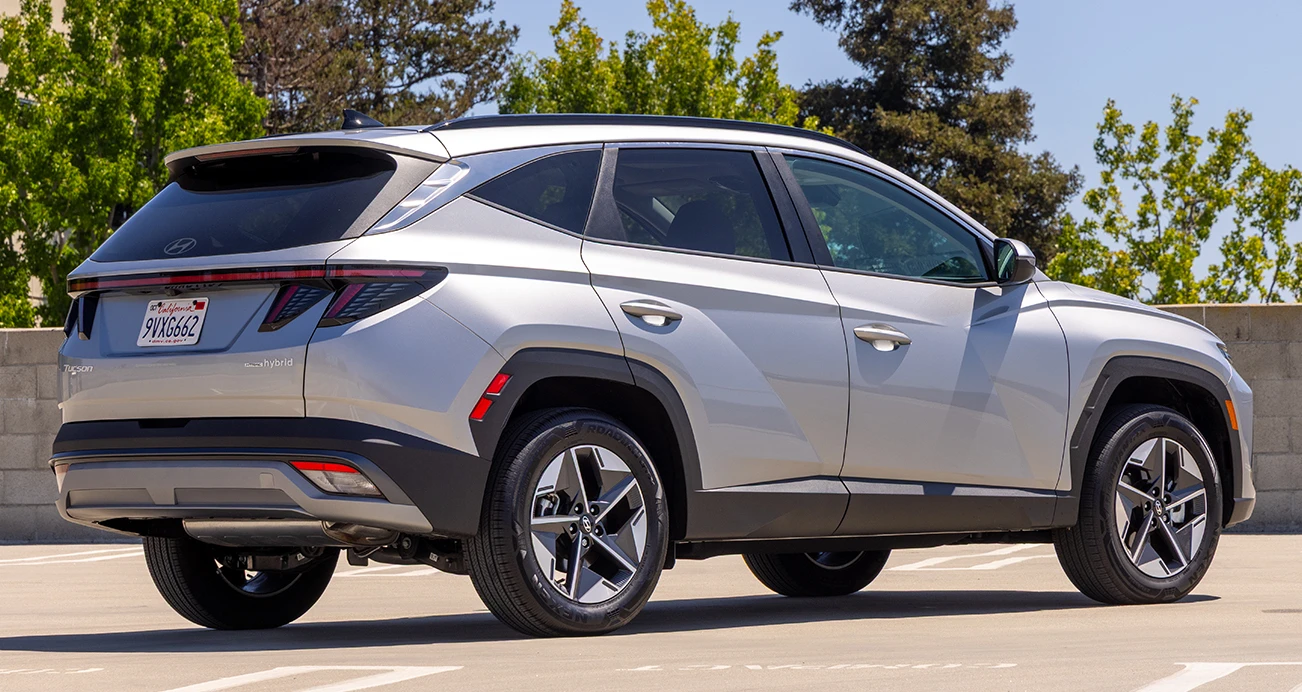
If we based this decision solely on how an SUV looked and how it made us feel, the Genesis GV70 would drive away with the top prize. But my job is to recommend the vehicle that is a complete package and appeals to the most people. The Tucson Hybrid's value proposition is hard to argue with. It offers plenty of space for family and cargo, excellent fuel economy, a long list of features, all for a price lower than both the GV70 and its competitors.

Ronald Montoya has worked in the automotive industry since 2008, writing hundreds of car-shopping articles on topics ranging from buying, selling, leasing, electric vehicles, maintenance, and more. He has also worked at multiple car dealerships and has bought and sold over 100 vehicles. Ronald is a senior writer at Edmunds, where he brings his passion for cars and finds ways to distill that knowledge to the average shopper.