Which off-road-ready SUV is right for you?
With thousands of vehicles in our inventory, we’re here to help make car research easier for you. We’ve partnered with car-review experts from Edmunds to weigh in on what matters most when you’re looking to buy a truck or car.
***
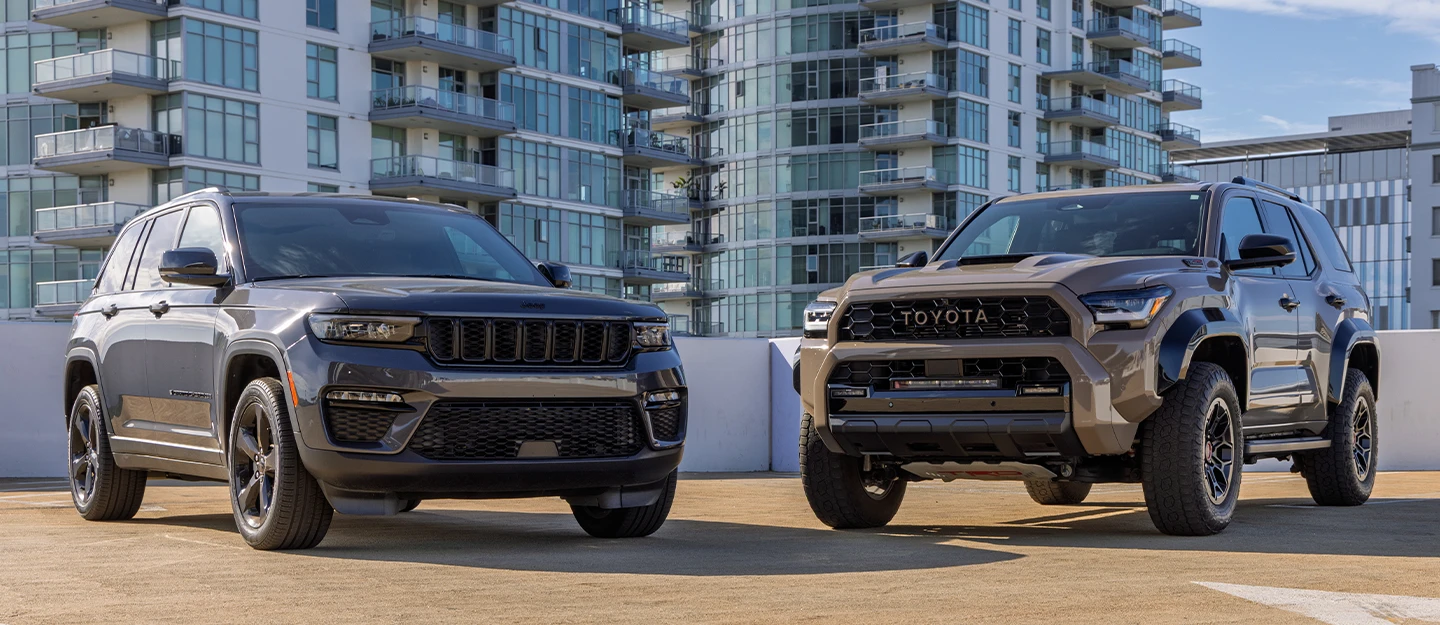
If you're looking for an SUV big enough to haul your family but also capable enough to tackle dirt roads and rough terrain, you're going to at least consider the Jeep Grand Cherokee and the Toyota 4Runner. Both of these SUVs come with standard seating for five, a spacious cargo area, and available four-wheel drive. They're great alternatives if you have your heart set on the kinds of off-road adventures promised by a Ford Bronco or Jeep Wrangler but you need a roomier, more comfortable daily driver.
But both have drawbacks, especially if off-road performance isn't important to you. We'll cover the pros and cons of both of these used SUVs to help you decide if one of them is the right choice for you.
Jeep Grand Cherokee and Toyota 4Runner: A Quick Overview
We're focusing on three different vehicles in this comparison: the 2023 model year for the Jeep Grand Cherokee and fifth-generation Toyota 4Runner, along with the 2025 model year for the sixth-generation 4Runner. On CarMax, the Jeep is around $30,700, the fifth-generation 4Runner comes in at just over $43,000 , and the sixth-generation 4Runner jumps to around $48,867 .
Both the Grand Cherokee and the 4Runner are available with four-wheel drive, and both are available in luxe trims. But the Jeep certainly boasts the more luxurious-looking of the interiors; whether it holds up to closer scrutiny is something we'll get into later. You also get a lot of standard driver aids with both SUVs, including adaptive cruise control and blind-spot warning.
Then there's reliability, which is the other dividing line between these vehicles. While the Toyota 4Runner has a sterling reputation for reliability, the Jeep Grand Cherokee … well, does not. Price is also a factor, given the average price of a 4Runner is significantly higher than that of the Grand Cherokee. Let's get into that and all the other pros and cons for both of these vehicles.
Jeep Grand Cherokee Overview
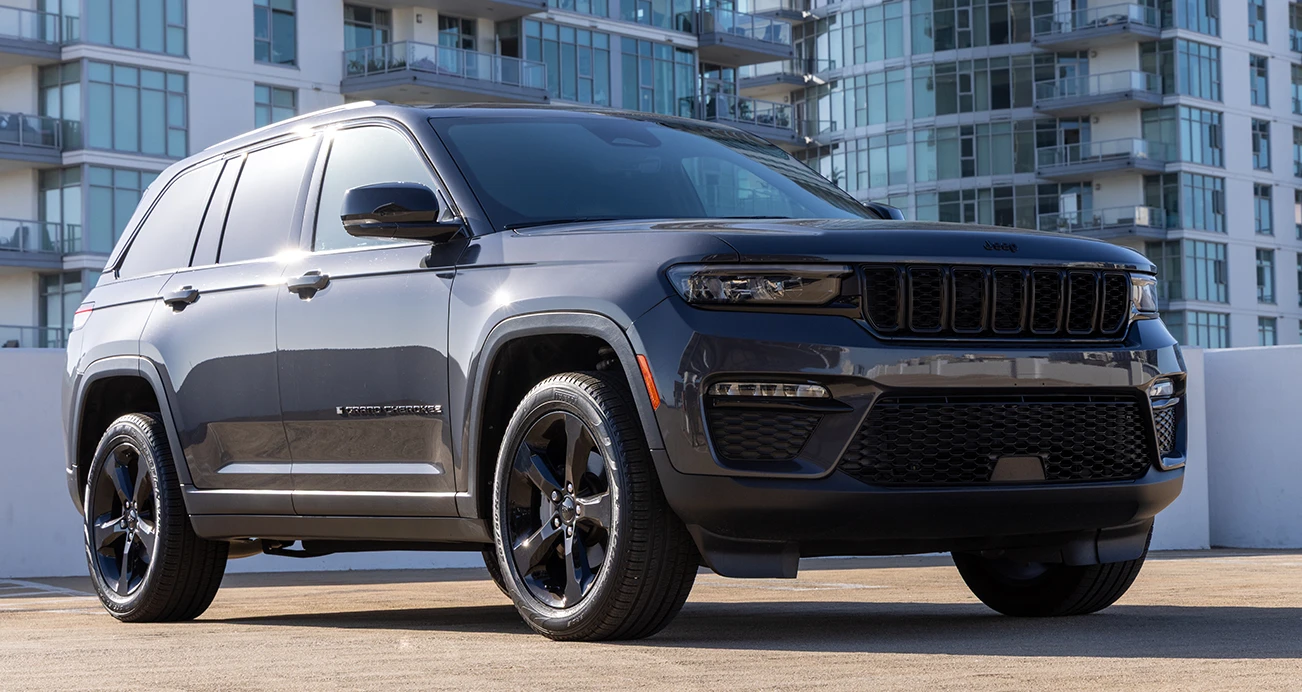
The 2023 Jeep Grand Cherokee we're looking at in this article is available in five trims and with three different powertrain options. The trim levels are the Laredo, Limited, Trailhawk, Overland, and Summit. You can get a 2023 Grand Cherokee with a standard 3.6-liter V6, and on Overland and Summit trims, there's an available 5.7-liter V8. There's also a 2.0-liter four-cylinder plug-in hybrid (called the 4xe).
Let's start with that 4xe: After driving one for a year, Edmunds' editors concluded that they couldn't recommend it due to some pretty serious reliability issues. You can check out Edmunds' One-Year Road Test of the 2023 Jeep Grand Cherokee 4xe for all the details on that. As for the other engines, both the V6 and V8 are quite powerful, but if you want to take advantage of the Grand Cherokee's impressive towing capacity, you'll want the V8.
Base model (Laredo) Jeep Grand Cherokees come with lots of desirable standard features, from wireless Apple CarPlay® and Android Auto™ to driver aids like adaptive cruise control and blind-spot warning. You also get dual-zone automatic climate control, which lets the driver and passenger set their own temperature to their liking. Roof rails and heated mirrors also come standard on the Grand Cherokee.
But if you want more creature comforts on your Grand Cherokee, fear not. The top-tier Summit trim comes with a wood-trimmed steering wheel, massaging front seats, four-zone climate control (so your rear passengers can customize their temperature, too), and a surround-view camera. Even these Jeeps aren't fully loaded; there are a bevy of available packages that can increase the luxury, including cooled second row seats, a trailer-tow package, and a premium audio system.
Jeep Grand Cherokee advantages
The Jeep Grand Cherokee, when properly equipped, is the undisputed champion of towing capacity among midsize SUVs. That capacity is a whopping 6,200 pounds with the V6 equipped and goes up to 7,200 pounds with the V8. If you plan to take advantage of everything this vehicle has to offer, you'll be pleased with its capability.
That includes taking the Grand Cherokee off-road. Edmunds called out its off-road chops in its review of the Grand Cherokee, calling it the "most capable SUV out there" when equipped with the Quadra-Trac II® 4WD system. The Jeep's available air suspension system makes getting off the beaten path more comfortable, too.
Overall cargo space (37.7 cubic feet) is about average compared to other midsize SUVs, but the Edmunds review highlights the Jeep's interior storage. There's lots of storage for small items, including spacious center console bins in both the front and back rows. The second row is also plenty roomy for installing a rear-facing car seat.
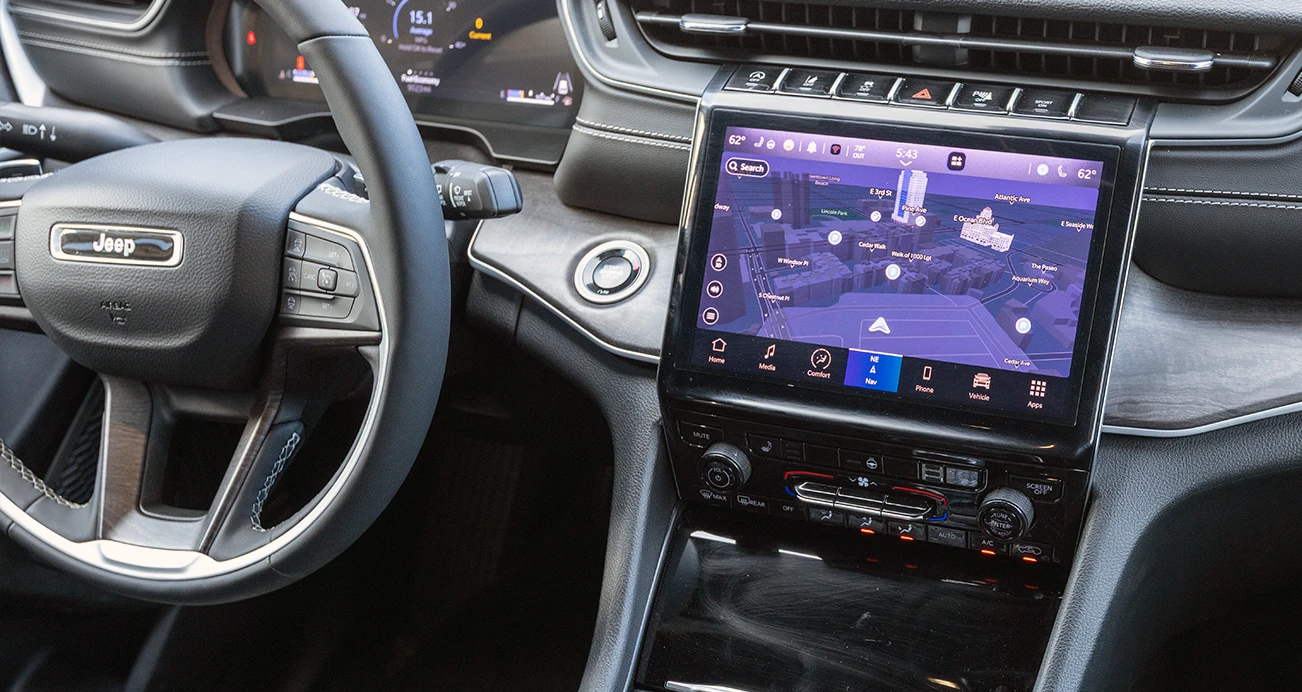
Want the latest and greatest in tech? Good news there, too. The Jeep Grand Cherokee comes with an 8.4-inch touchscreen with wireless Apple CarPlay® and Android Auto™. As we noted earlier, you also get a whole bunch of advanced driver aids, including adaptive cruise control and blind-spot monitoring. There's also an available surround-view camera that makes both off-road adventures and drives through crowded parking lots a lot easier.
You might also be impressed by the look of the Grand Cherokee's interior. And yes, the higher trims in particular photograph quite well. But this topic straddles the line between pro and con, so let's get into the drawbacks of the Jeep Grand Cherokee.
Jeep Grand Cherokee drawbacks
In Edmunds' year-long review of the Grand Cherokee, many of those premium-looking features felt quite cheap. The leather was not as soft or supple as the price would indicate, and the wood panels on the Edmunds test vehicle both felt and looked cheap upon closer inspection. The overall build quality of the Grand Cherokee was disappointing, with rattles and shakes you shouldn't experience in a vehicle with luxury aspirations.
But that's not the chief drawback of the Jeep Grand Cherokee. Its reliability. We look to RepairPal®, an independent reliability tracker, which gives the Jeep Grand Cherokee 3.5 stars. RepairPal calls the Grand Cherokee "above average," though you should note it is ranked 15th out of 26 SUVs with an annual repair cost of $666.
So what's the big deal? Owners flagged all kinds of reliability issues, many of them centered around the electrical systems on the SUV. And then there's the experience Edmunds had with a 2023 Jeep Grand Cherokee 4xe.
That SUV ended up on a flatbed three times over the course of a year, and one of those times I was behind the wheel. I ended up needing a more than 100-mile tow after the Grand Cherokee suffered an electrical issue on the way home from a weekend of camping. Not fun.
Fifth-Generation Toyota 4Runner Overview
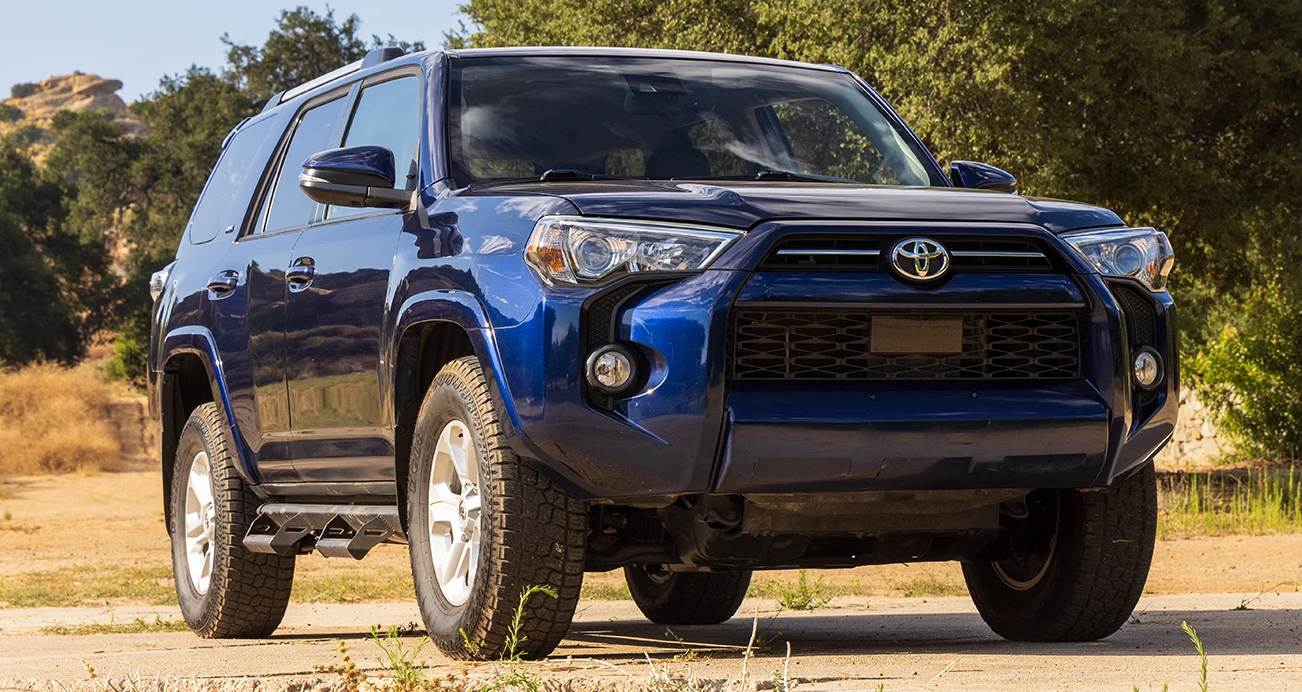
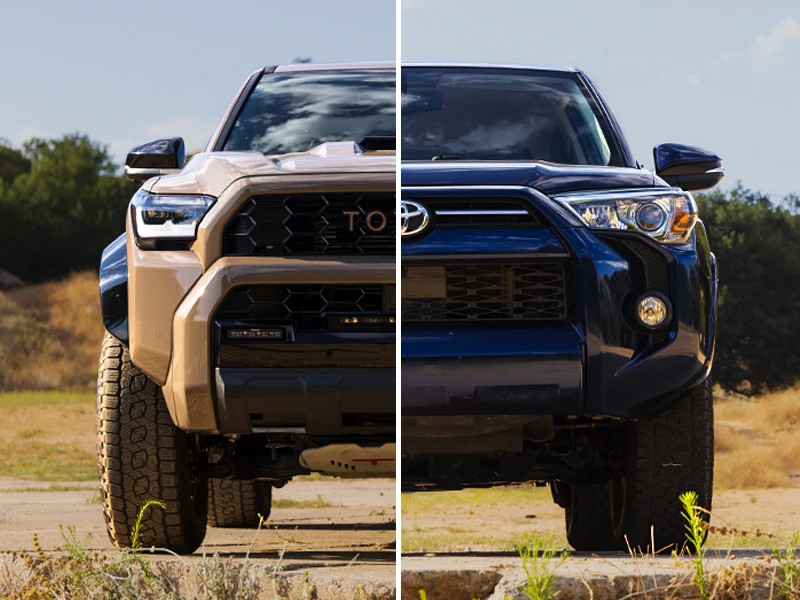
You can have any powertrain you want in your Toyota 4Runner as long as it's a 4.0-liter V6 with an automatic transmission. Every trim of the 4Runner comes with the V6, and there are a lot of trim levels. They start with the SR5 and go on to include the TRD Sport, SR5 Premium, TRD Off-Road, TRD Off-Road Premium, Limited, and TRD Pro.
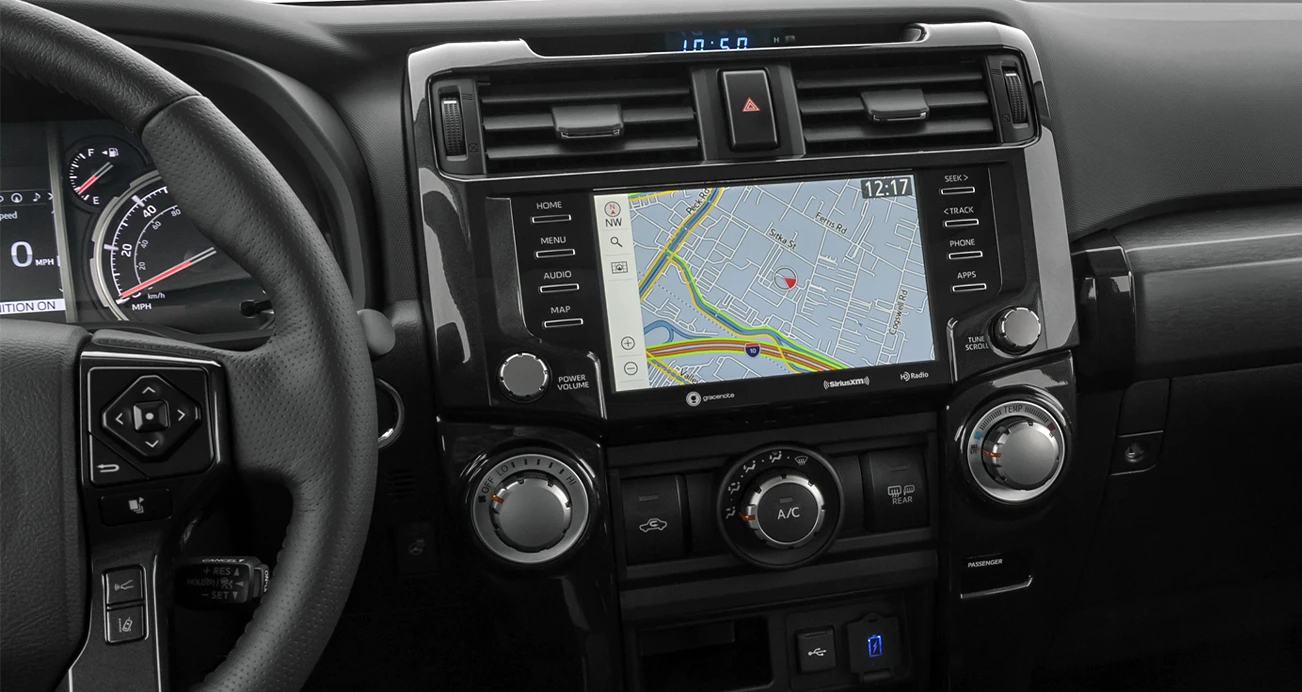
The 4Runner starts relatively well-equipped, including an eight-inch touchscreen, wired Apple CarPlay® and Android Auto™, adaptive cruise control, and blind-spot warning. The higher trims feature a mixture of off-road goodies and creature comforts. The most luxurious trim, Limited, includes a sunroof, leather upholstery, cooled front seats, a 360-degree camera, and a premium sound system.
But if you want to go full-tilt into off-road territory, check out the TRD Pro. It comes with an off-road-focused suspension, special wheels, a special front skid plate, and a roof rack. Four-wheel drive is available on every 4Runner, and it comes standard on TRD Off-Road, TRD Off-Road Premium, and TRD Pro trims.
Fifth-Generation Toyota 4Runner advantages
Do you plan to take your 4Runner off-road? If the answer is yes, this is unequivocally the biggest advantage of buying one. The Toyota 4Runner is not known for its grace on highways or city streets, but take it off the beaten path and you'll be impressed. This is what Edmunds had to say in its review of the 4Runner:
"The 4Runner backs up its burly skin with a traditional body-on-frame truck chassis, a solid rear axle, and a suspension tuned for serious off-road duty. The 4Runner doesn’t just go beyond the trailhead, it goes beyond the trail itself to parts unknown."
The 2023 4Runner we're covering today also has more than adequate tech inside. The touchscreen is not as large as what you'll get on a current-generation 4Runner—more on that later—but it's responsive and comes standard with Apple CarPlay® and Android Auto™. You also get a generous set of driver aids as standard features, including adaptive cruise control and blind-spot warning.
The interior of the 4Runner is roomy enough for adults to sit comfortably in both rows. There's also plenty of room for installing a rear-facing car seat in the second row, but keep in mind the 4Runner sits high off the ground. That can make it challenging for some adults to get a car seat into the second row, and small kids will need help getting in (and out) of the back seat.
There's also reliability to consider. We look to RepairPal®, an independent reliability tracker, which scores the 4Runner a 4 out of 5 and ranks it ninth out of 26 midsize SUVs. The average annual repair cost for a 4Runner is $514, which is below average and beats the Jeep Grand Cherokee's average repair cost of $666.
Toyota has been selling this 4Runner with this V6 engine for a very long time, and you can find plenty of examples of owners singing its praises. There have been reliability questions about the brand-new 4Runner and its turbocharged four-cylinder; so the V6 may be another big advantage for this SUV.
Fifth-Generation Toyota 4Runner drawbacks
The Toyota 4Runner is a large vehicle that sits high off the ground. Unsurprisingly, it does not have good fuel economy. Its EPA-estimated 17 mpg combined is quite a bit worse than the 22 mpg combined score for the Grand Cherokee's V6, and it's decidedly worse than just about every midsize crossover SUV you can find.
If you're going to actually use the 4Runner's capabilities on a regular basis, this might not be a big deal. But if you don't plan on going anywhere more rugged than an REI parking lot, you might want to consider alternatives.
The 4Runner is also not, generally speaking, pleasant to drive. The acceleration is sluggish, and the brakes are squishy and unsatisfying. Its truck-based construction results in a bouncy and stiff ride, especially over uneven pavement. Then there's wind noise, which can be quite loud on highways.
Sixth-Generation Toyota 4Runner Overview
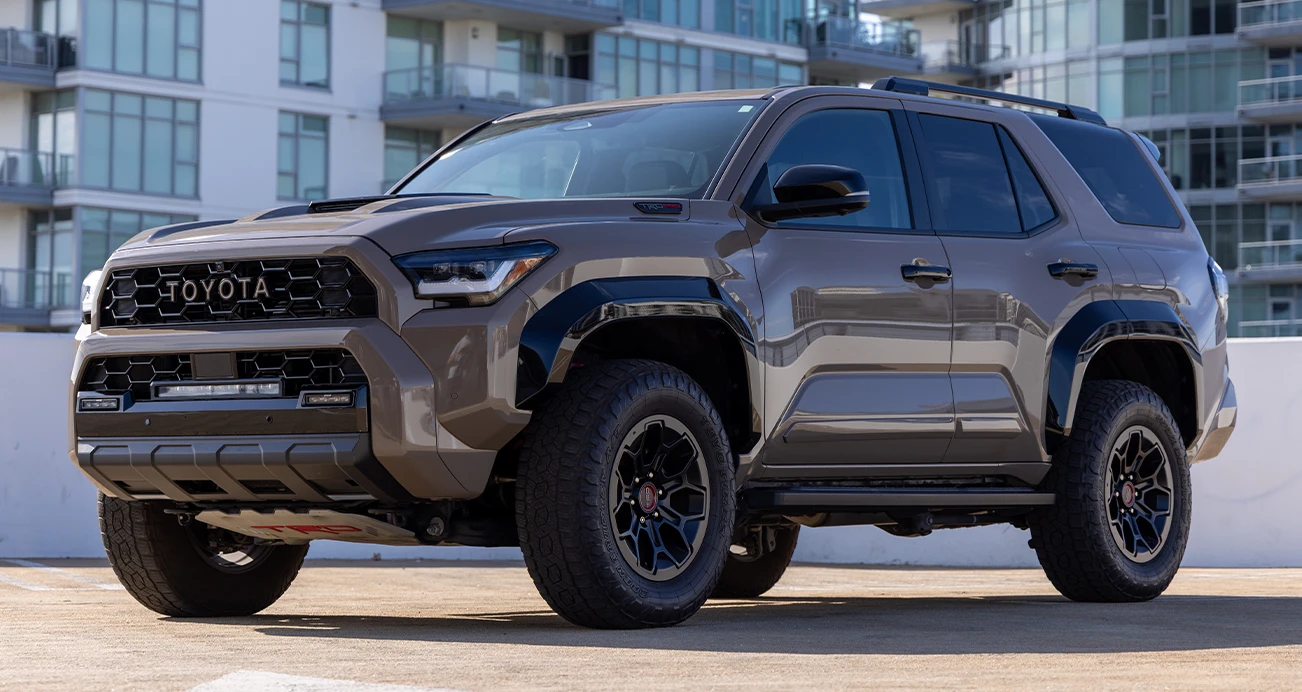
Toyota fully redesigned the 4Runner for the 2025 model year, bringing a brand-new engine, an updated interior, and new tech features. The V6 is gone, replaced by a turbocharged four-cylinder engine that makes 278 horsepower. But it's not the only option.
You can also get the i-Force Max engine, which adds a hybrid system that increases power output to 326 horsepower. That comes standard on three trims: Platinum, TRD Pro, and Trailhunter, the last of which makes only 323 horsepower. The drawback? You can't get a third row in this configuration—not that Edmunds recommends going that direction.
The sixth-generation 4Runner comes with a nice collection of features standard, including adaptive cruise control, blind-spot warning, and lane-keeping assistance. You get an eight-inch touchscreen and wireless Apple CarPlay® and Android Auto™. Bumping up a couple of trims gets you the 14-inch touchscreen, which is a night-and-day improvement over the infotainment in the old 4Runner. It's not just good for a Toyota; it's legitimately very nice to use. And Toyota has wisely left a lot of physical controls in the 4Runner, so you can change the temp with a knob instead of a tap.
Sixth-Generation Toyota 4Runner advantages
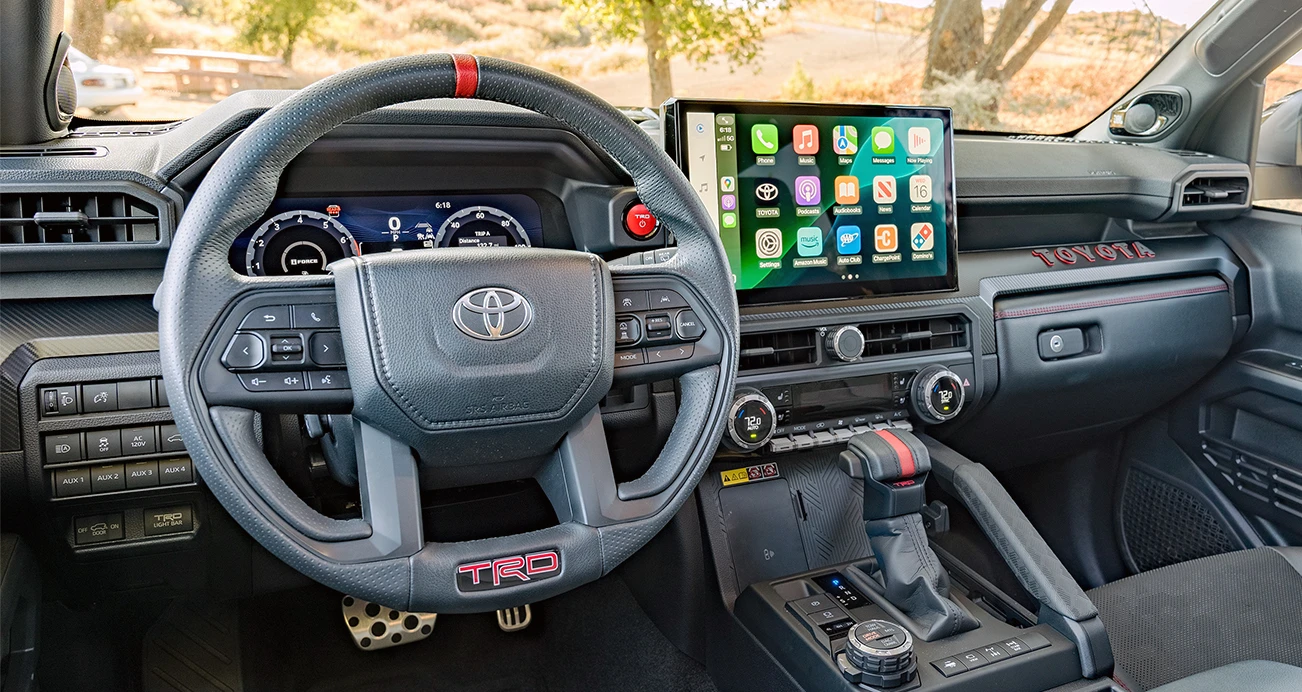
The advantages of the 4Runner did not magically change by going from the fifth to the sixth generation. It is still an absolute beast off-road when properly equipped. The top trims include features like specialized off-road shocks, a disconnectable stabilizer bar, a high-clearance grille, and aluminum skid plates.
But even if you're not looking for a true, honest-to-goodness off-roader, the 4Runner has appeal. Four-wheel drive is available on every 4Runner, and its high ride clearance makes it a natural fit for journeys into the great outdoors. This is also a much nicer 4Runner than the one it replaced, with an improved interior featuring refreshingly modern tech.
What about reliability? Typically, we rely on RepairPal®, an independent reliability tracker. But the latest generation of the 4Runner hasn't been out quite long enough for RepairPal® to give it a rating. That doesn't mean the 4Runner is unreliable, of course, but it isn't the known quantity that the fifth-generation version of the vehicle is.
Sixth-Generation Toyota 4Runner drawbacks
There are some familiar drawbacks to the sixth-generation Toyota 4Runner, and they start with ride quality. This is not a comfortable vehicle, and you are reminded of its trucky roots every time you get on the highway. There's jostling, shuffling, and bouncing on most terrain, and you deal with loud wind noise thanks to the vehicle's boxy shape. And while the turbocharged engine may be more efficient, it's loud and unpleasant when you really get on the gas.
The 4Runner is undoubtedly a large vehicle, but it doesn't always feel that way on the inside. The front row is a little cramped given how immense the SUV is, and cargo space is good, not great. You get 48.4 cubic feet of storage behind the second row, which is more than the slightly smaller Honda Passport offers.
Because the 4Runner sits high off the ground, loading your gear into the back can be a bit of a chore. That also impacts everything from installing car seats to helping kids into the second row. These aren't unique drawbacks to the 4Runner; most other trucky SUVs have these problems, but it's something to consider if you're at all comparing the 4Runner to a crossover-style SUV like that Passport.
There's also price to consider. This is not a cheap vehicle, and unfortunately, picking one up on the used market doesn't change that. If this version of the 4Runner turns out to be as reliable as its predecessor, that might be OK. But for now, the 4Runner is not nice enough to live with to justify the significant price premium it commands.
Which Way to Go?
If you're just looking for a capable off-roader, the price of the Jeep Grand Cherokee is hard to ignore. And if you're more convinced by the Jeep's luxury chops than Edmunds, you might be able to get a luxe vehicle for about the same price as a much more bare-bones 4Runner.
But if reliability is your primary concern, the extra cost associated with the fifth-generation 4Runner might seem like a bargain. It's just as capable as the Grand Cherokee and has been sold in a wide range of trims, meaning you're almost certainly going to be able to find one that suits your needs.
Where does that leave the sixth-generation 4Runner? Well, it's tough to recommend given its eye-watering price. There's no doubt it has improved over the previous generation, but not by enough to justify the high cost.
And if you don't actually need all the capability that comes with a Grand Cherokee or 4Runner, might we suggest taking a look at one of these midsize SUVs?

Jake Sundstrom has worked in the automotive industry since 2017 and written hundreds of car related articles over the course of his career. Jake is an editor at Edmunds, where he helps produce the best used car content on the web. He has also contributed to the National Hot Rod Association and other motorsport publications. When he's not writing about cars, he's probably driving them to his next vacation; he's still working out how to get a Wrangler from Los Angeles to Maui.