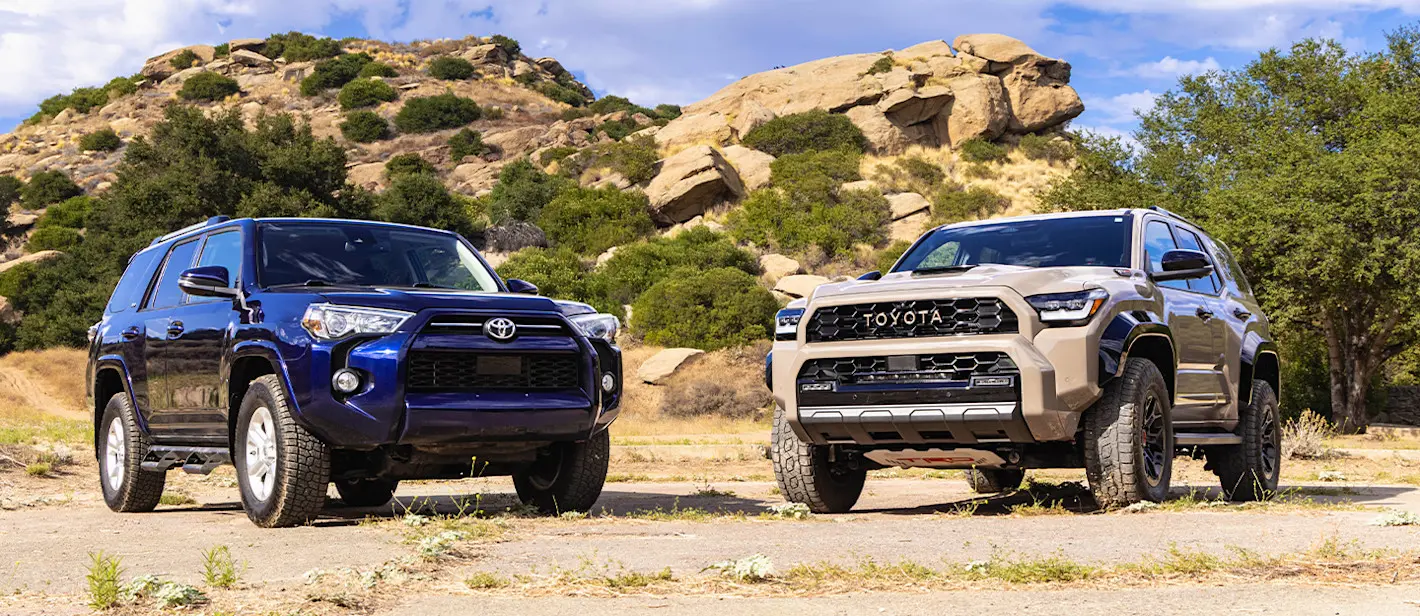
We compare the last two generations of Toyota's SUV
With thousands of vehicles in our inventory, we’re here to help make car research easier for you. We’ve partnered with car-review experts from Edmunds to weigh in on what matters most when you’re looking to buy a truck or car.
**
The Toyota 4Runner combines the capability of a pickup truck with the convenience of an SUV, giving you a machine that can go off-road and is large enough to fit your crew and all their gear. Toyota launched the sixth generation of the 4Runner for the 2025 model year, bringing with it a new engine and a whole host of technology updates.
But the fifth-generation Toyota 4Runner, which was on sale from 2010 to 2024, has plenty going for it. Even though Toyotas famously hold onto their value for a long time, you're still likely to save several thousand dollars by buying a used fifth-generation 4Runner compared to a used sixth-generation.
So what's the trade-off? We'll dig into the basics of both of these SUVs and then compare their cargo capacity, interior, and capability. Which of these off-road-focused trucks is right for you? Read on!
Fifth-Generation Toyota 4Runner Basics
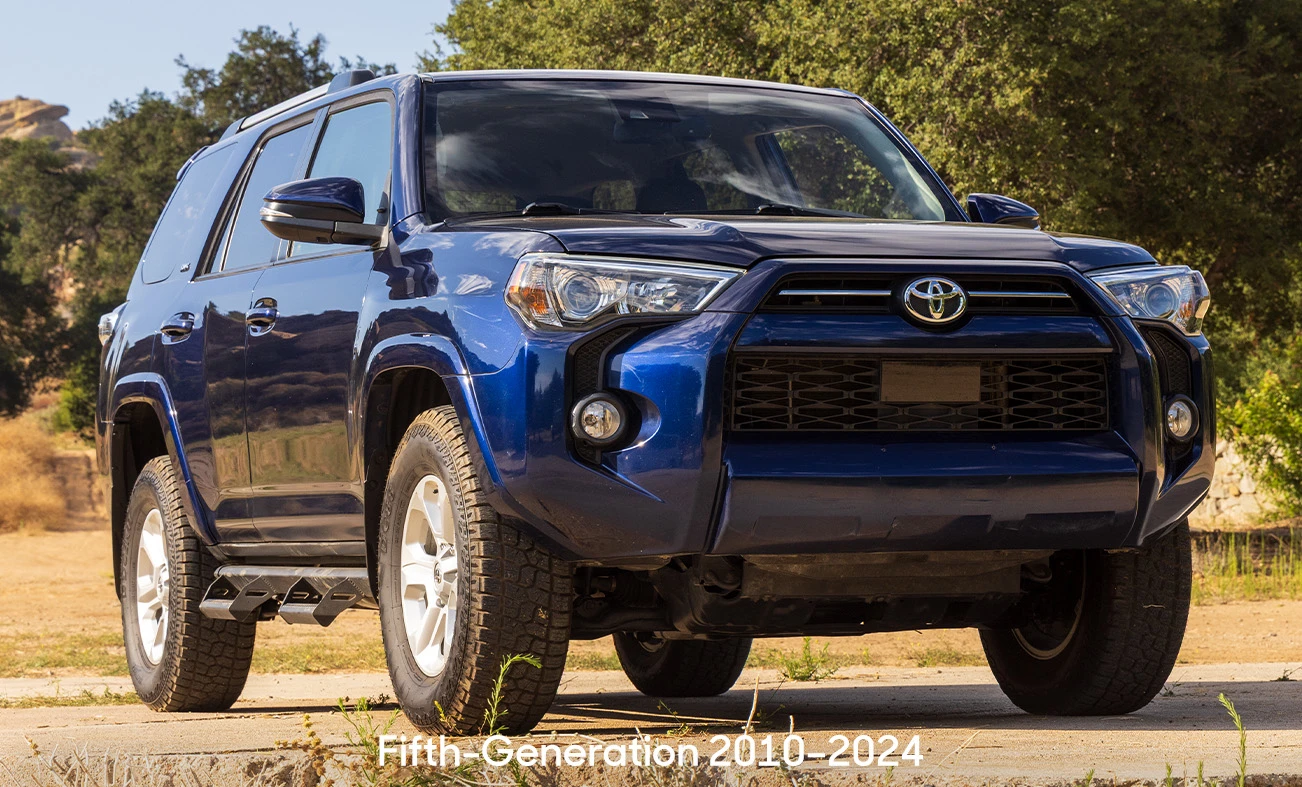
Toyota introduced the fifth-generation 4Runner back in 2010 and sold it all the way through 2024. That is an eternity when it comes to vehicle generations—most generations last between five and seven years. Thankfully, Toyota introduced an update in 2020 that attempted to bring the 4Runner up to date from a tech standpoint with a new infotainment system with Apple CarPlay® and Android Auto™, plus some driver-assist systems.
But the bones of the truck remained the same throughout the generation. In this case, that's not a bad thing. Every fifth-generation 4Runner came standard with a 4.0-liter V6, which has spawned a legion of fans.
Sixth-Generation Toyota 4Runner Basics
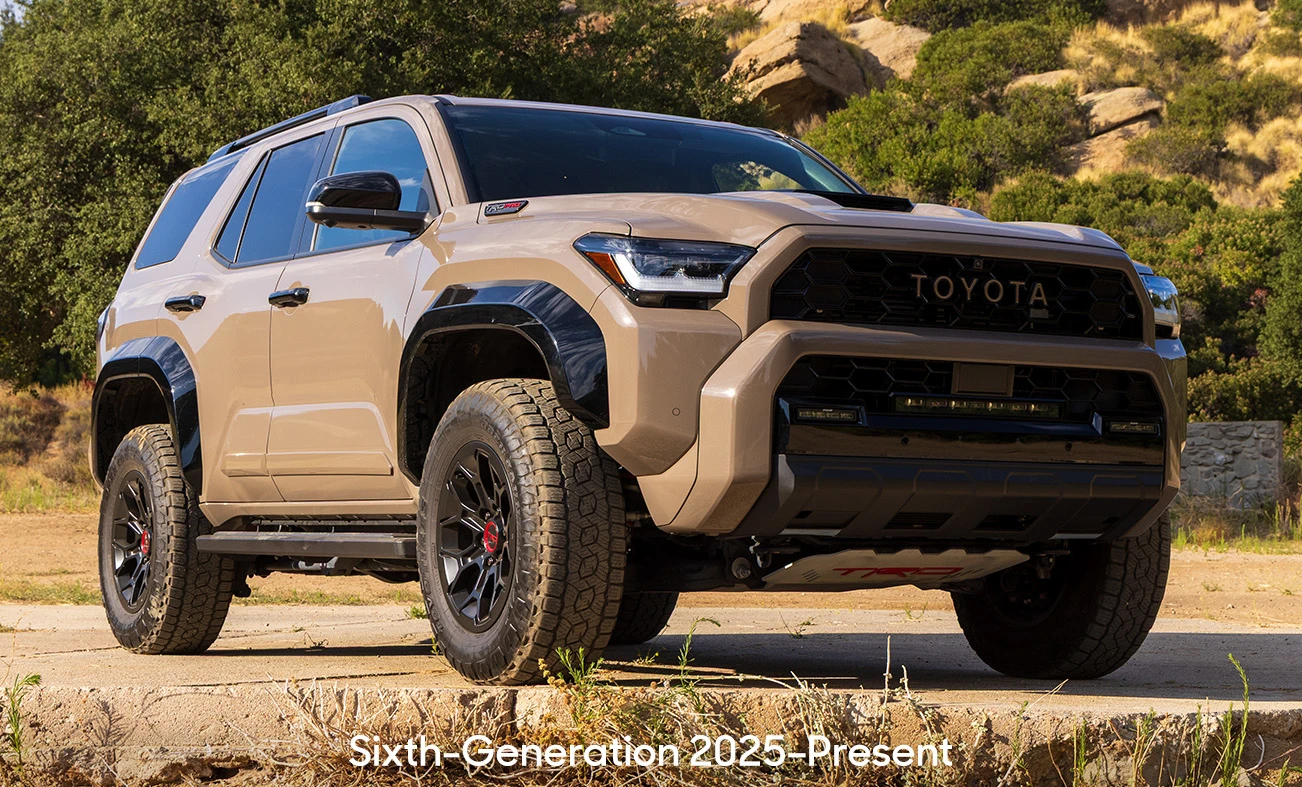
Why is the V6 significant to the fifth-generation 4Runner? Because Toyota nixed it when it redesigned the 4Runner for 2025. A turbocharged four-cylinder engine replaced the V6, and Toyota added a hybrid option to the top three trims of the 4Runner. That hybrid engine increases power output but doesn't make the 4Runner much more efficient. You also can't get a third row in hybrid 4Runners, though Edmunds doesn't recommend the third row on any 4Runner because it's so cramped and difficult to access.
The new engine gets up to 23 mpg on the EPA's combined cycle, an improvement of 5 miles per gallon over the older 4Runner's 17 mpg. But you should note that Edmunds' One-Year Road Test of the 4Runner did not exactly impress when it came to efficiency.
The other big change to the 4Runner is inside the cabin. An eight-inch touchscreen comes standard, though going up a couple of trim levels gets you the massive 14-inch touchscreen. The sixth-generation 4Runner also comes standard with a lot more driver aids, such as adaptive cruise control and blind-spot warning.
4Runner vs. 4Runner
So, which 4Runner is right for you? Let's go category by category.
Engine choices
This is, thankfully, pretty simple. The fifth-generation Toyota 4Runner comes with a 4.0-liter V6 good for 270 horsepower, 278 lb-ft of torque, and the option of rear-wheel drive or four-wheel drive. That engine is paired with a five-speed automatic transmission.
The sixth-generation 4Runner comes with a turbocharged 2.4-liter four-cylinder engine, good for 278 horsepower and 317 lb-ft of torque. Getting the hybrid version of this engine bumps you up to 326 horsepower and 465 lb-ft of torque.
Do all those numbers matter? Well, it depends. If you're planning on towing with your 4Runner, yes. The sixth-generation 4Runner can tow up to 6,000 pounds when properly equipped. That's a full 1,000 pounds more than the previous generation of the SUV and is a bit above average compared to its competition.
Make no mistake: The new 4Runner is also quicker than the old one. In Edmunds' testing, the 4Runner with the hybrid four-cylinder got up to 60 mph a full second quicker than the old 4Runner with the V6. Neither of these vehicles is a speed demon, but that extra bit of pace can make a difference when you're trying to get this truck up to speed on a highway.
But this isn't the full picture. The old 4Runner engine was venerated for its reliability. There's a reason Toyota kept rolling out fifth-generation 4Runners with the same old V6: People really liked it. The truth is, it's too early to know if the turbocharged four-cylinder will become a fan favorite like the V6 it replaced.
Jake's take
I'm giving the edge to the sixth-generation 4Runner for now. It's a little more fuel-efficient and it's a little more powerful. We'll see how it holds up in the years to come.
Passengers and cargo
The sixth-generation 4Runner is a little bit longer than its predecessor, adding a whopping 1.2 cubic feet of storage behind the second row. That's just a bit larger than the size of a standard grocery bag. Both 4Runners come standard with seating for five, but a third row is available on some lower trims of both SUVs.
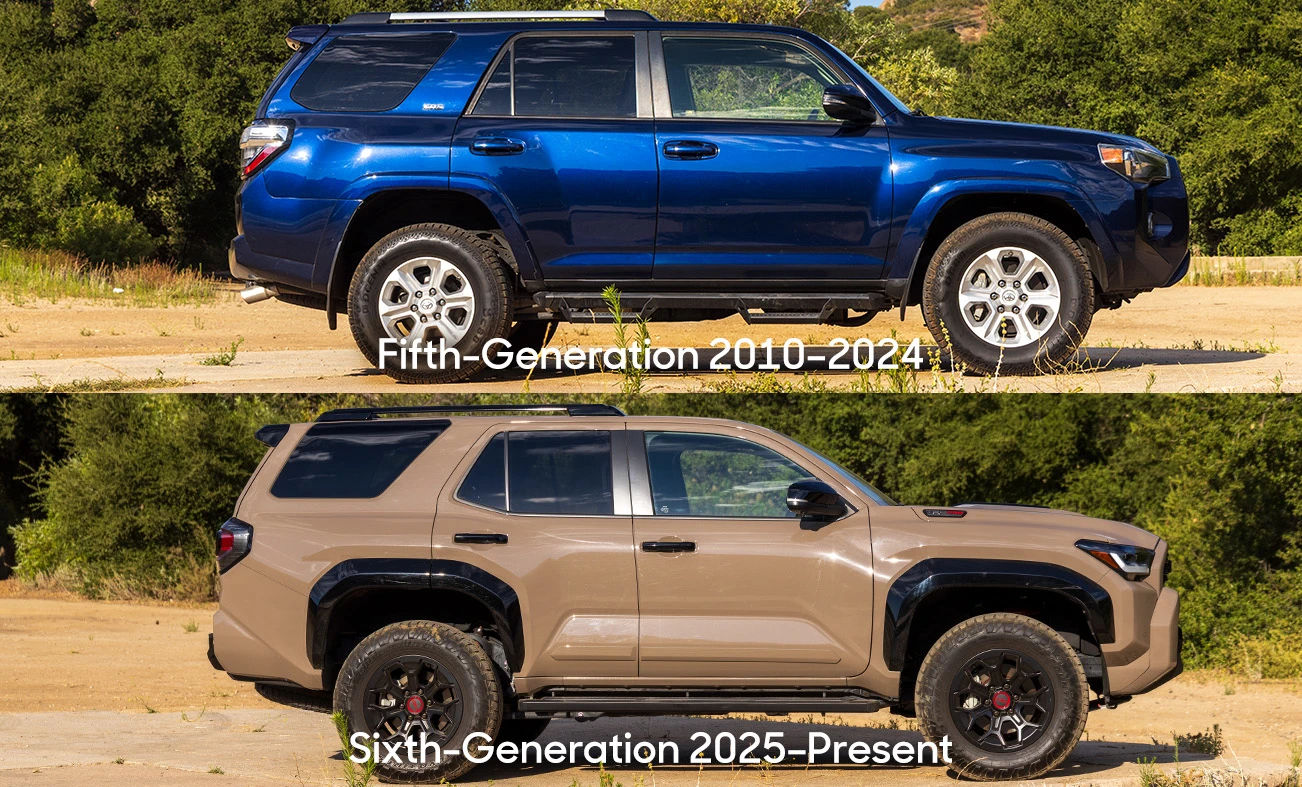
As I mentioned earlier, Edmunds doesn't recommend the third row on the 4Runner. It's cramped and difficult to access. You may have seen other three-row SUV reviews refer to the third row as "kid-friendly" or something of the like. That is not the case with the 4Runner.
Other than that, there's not much to separate these two. Interior storage might be a little bit better in the sixth-generation 4Runner, but only by a very narrow margin. Front passenger room is pretty adequate in both vehicles, and you won't have any trouble fitting a rear-facing car seat in the second row, although adults are a slightly different story; see below.
Keep in mind that the 4Runner sits high enough off the ground that getting the car seat up and into the vehicle can be a pain in the neck, but it's no worse than in other truck-based vehicles.
Jake's take
Technically the sixth-generation 4Runner gets the edge here, but this is basically a tie.
Interior and tech
Let's start with what these two vehicles have in common: just about the same amount of room in both the front and second rows. Edmunds' ratings of both vehicles praised the comfort of the front row but were much more negative about the second. The 4Runner is a big vehicle, but it doesn't always feel like that once you're inside it.
The second row offers enough legroom for most passengers, but Edmunds noted a six-foot-tall reviewer had trouble sitting behind themselves, that is, when the front seat is adjusted to their liking, they found themselves lacking in legroom in the seat behind it. Rear seat room is actually a bit MORE cramped in the newer 4Runner. Headroom is also a sore spot, especially with the available sunroof attached; in this case, the newer 4Runner has a slight real-world advantage.
But if neither vehicle covers itself in glory when it comes to passenger space or comfort, the sixth-generation 4Runner clearly takes the top spot in tech. Wireless Apple CarPlay® and Android Auto™ are standard on all sixth-generation 4Runners. While wired Apple CarPlay® became standard in 2020, this is a pretty clear win for the sixth-generation SUV.
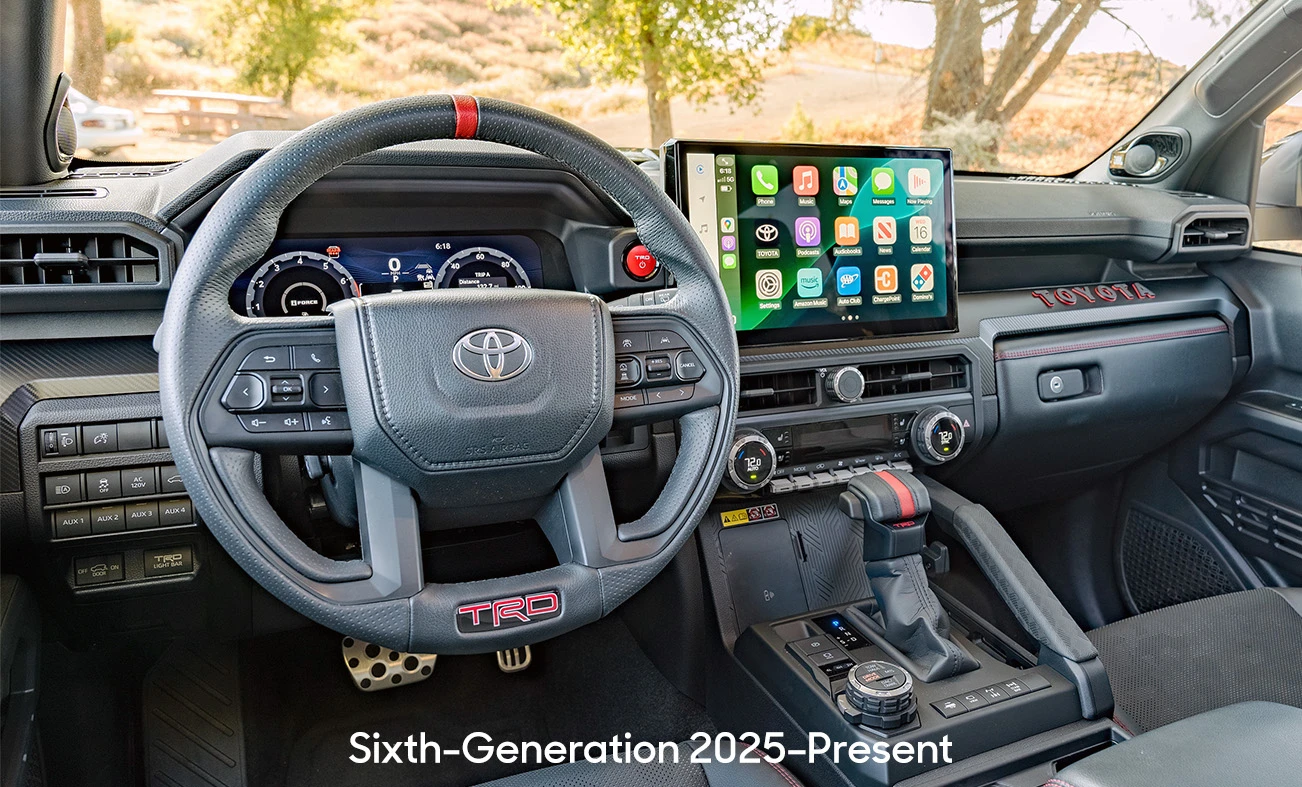
The sixth-generation 4Runner gets Toyota's latest infotainment software, which is clearer, crisper, and easier to use than the previous system. You also get a slightly longer list of standard driver aids on the sixth-generation 4Runner, including an improved adaptive cruise control that works well in low-speed situations.
Jake's take
The tech on the sixth generation 4Runner is much better than the tech on 2019 and older 4Runners, but the leap is not so large for 2020 - 2024 vehicles. I think the newer vehicles are better when it comes to tech, but not by so much that it's definitely worth the extra cash. And if you're more worried about how much room you've got in the vehicle than about having the latest and greatest tech, it's a wash.
Truck stuff
There's just not much to separate these two vehicles when it comes to off-road capability. They're both available with four-wheel drive and Edmunds has had nothing to complain about when taking the 4Runner off the beaten path. Where the sixth-generation 4Runner shines is its towing capacity. When properly equipped, the new 4Runner has a maximum towing capacity of 6,000 pounds, which is above average for this type of SUV.
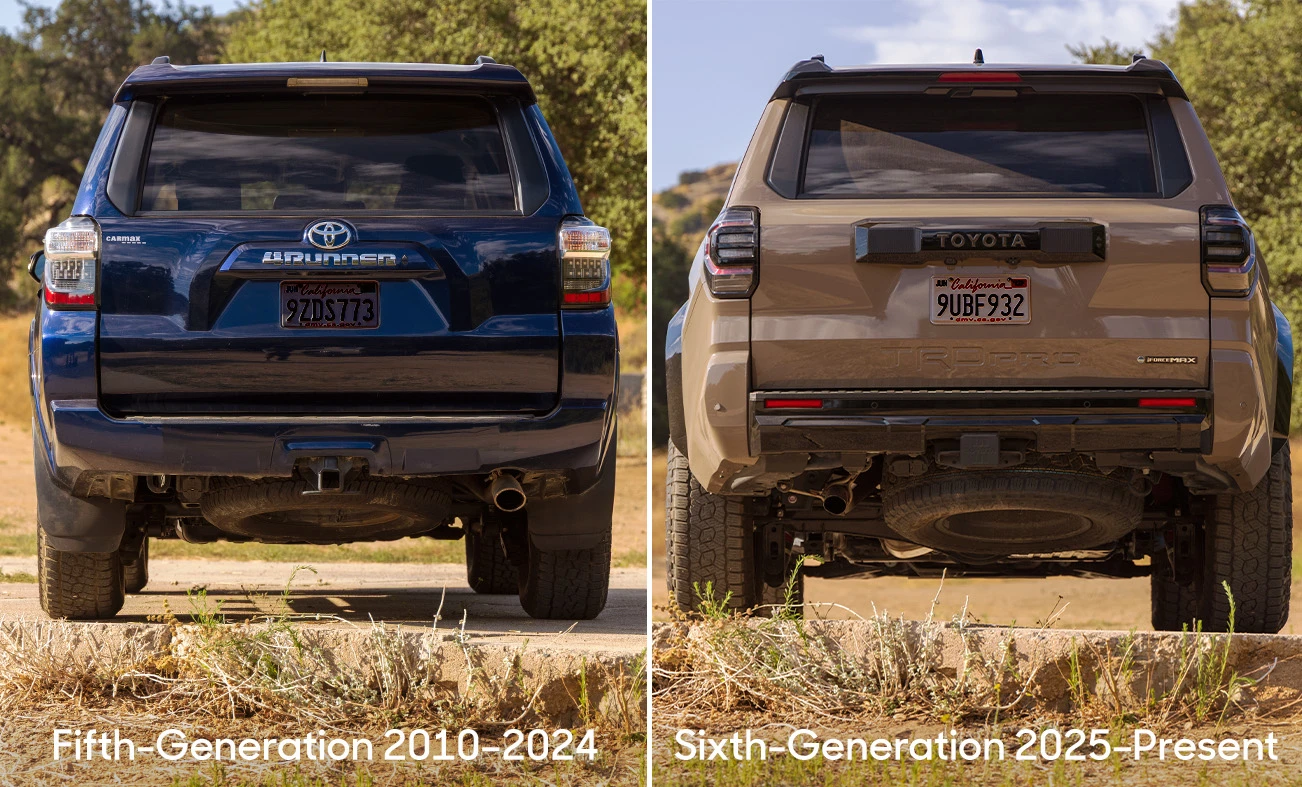
Of course for most drivers, the 5,000 pounds of towing capacity in the fifth-generation 4Runner is probably fine.
The sixth-generation 4Runner is also available in Trailhunter trim, which offers better overlanding capability through special off-road shocks, an air intake snorkel, and steel skid plates along with an integrated air compressor. So if that's your idea of a good time, the sixth-generation 4Runner might be the way to go.Jake's take
Yes, I must again hand it to the sixth-generation 4Runner … but.
I Wouldn't Spend All That Extra Cash for a Minor Upgrade
The sixth-generation 4Runner is undeniably more technically proficient than its predecessor. Yes, I think the cabin is a little bit nicer to look at. And yes, I dig that wireless Apple CarPlay® and Android Auto™ are standard features. I'm also a fan of spending less money on gas by way of the turbocharged four-cylinder engine.
But ultimately, this brand-new 4Runner feels more evolutionary than revolutionary. And given the steep increase in price, I'd probably be just fine getting an older 4Runner that I know will still be great for camping and off-roading.

Jake Sundstrom has worked in the automotive industry since 2017 and written hundreds of car related articles over the course of his career. Jake is an editor at Edmunds, where he helps produce the best used car content on the web. He has also contributed to the National Hot Rod Association and other motorsport publications. When he's not writing about cars, he's probably driving them to his next vacation; he's still working out how to get a Wrangler from Los Angeles to Maui.