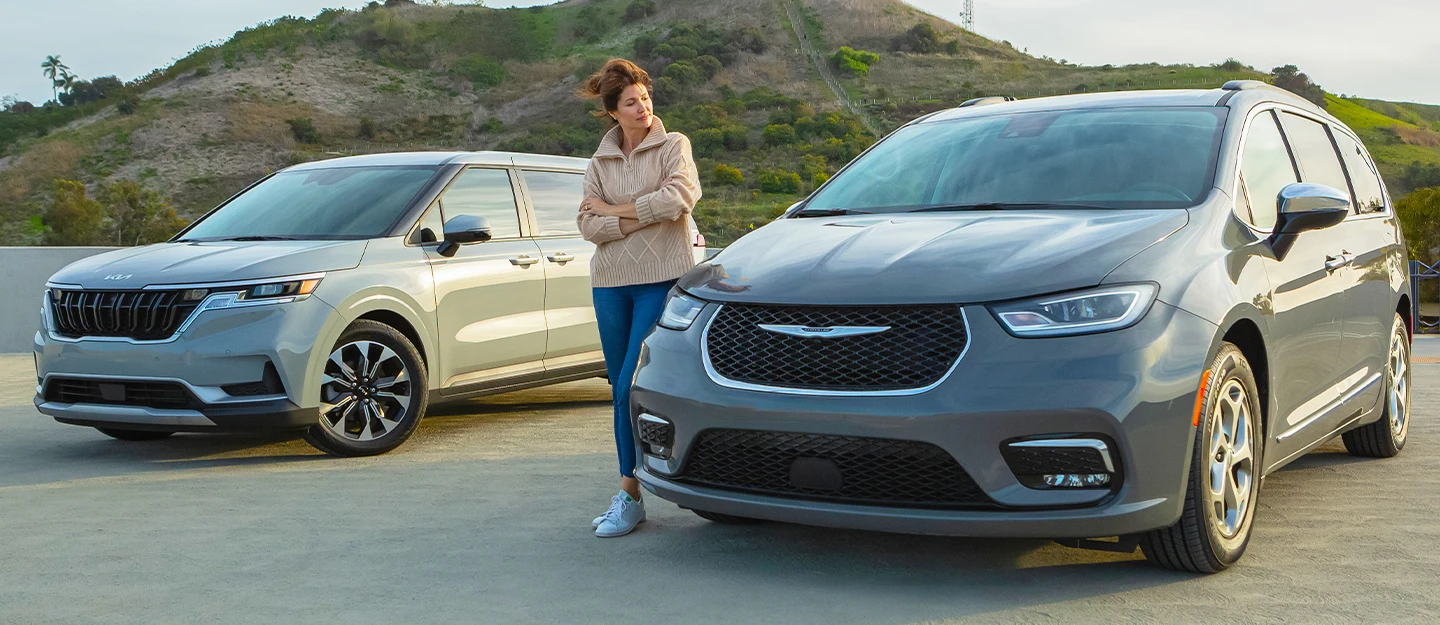
A look at what's different, and what's the same, for these two family haulers.
With thousands of vehicles in our inventory, we’re here to help make car research easier for you. We’ve partnered with car-review experts from Edmunds to weigh in on what matters most when you’re looking to buy a truck or car.
***
Chrysler practically invented the modern minivan way back in the early 1980s, so it's no surprise that its current van, the Chrysler Pacifica, is one of the best-sellers in the class. Of course, it's also an excellent minivan. It has loads of space, clever seating, and even a plug-in hybrid powertrain for those looking to save on gas.
Kia entered the minivan market in the early 2000s with the Sedona. That van was replaced by the Kia Carnival, and it is no less compelling a choice. With distinctive styling, advanced tech, and its own host of clever features, the Carnival is a viable alternative to Chrysler's Pacifica.
This article will help you compare the Pacifica and the Carnival, but if you're looking for other minivan options, check out our comparison of the Honda Odyssey and Toyota Sienna.
Independent reliability tracker RepairPal® says the Carnival is more reliable than the Pacifica, needing fewer repairs per year and costing less when they happen. On the other hand, the Pacifica is generally less expensive on the used market, with an average price that undercuts the Kia by several thousand dollars. But is a good price tag all it brings to the table? Or does the Pacifica hold up against Kia's latest despite its age? To level the playing field, let's look at the 2021-2024 Pacifica and see how it compares to the newcomer 2022-2024 Carnival.
Chrysler Pacifica Basics
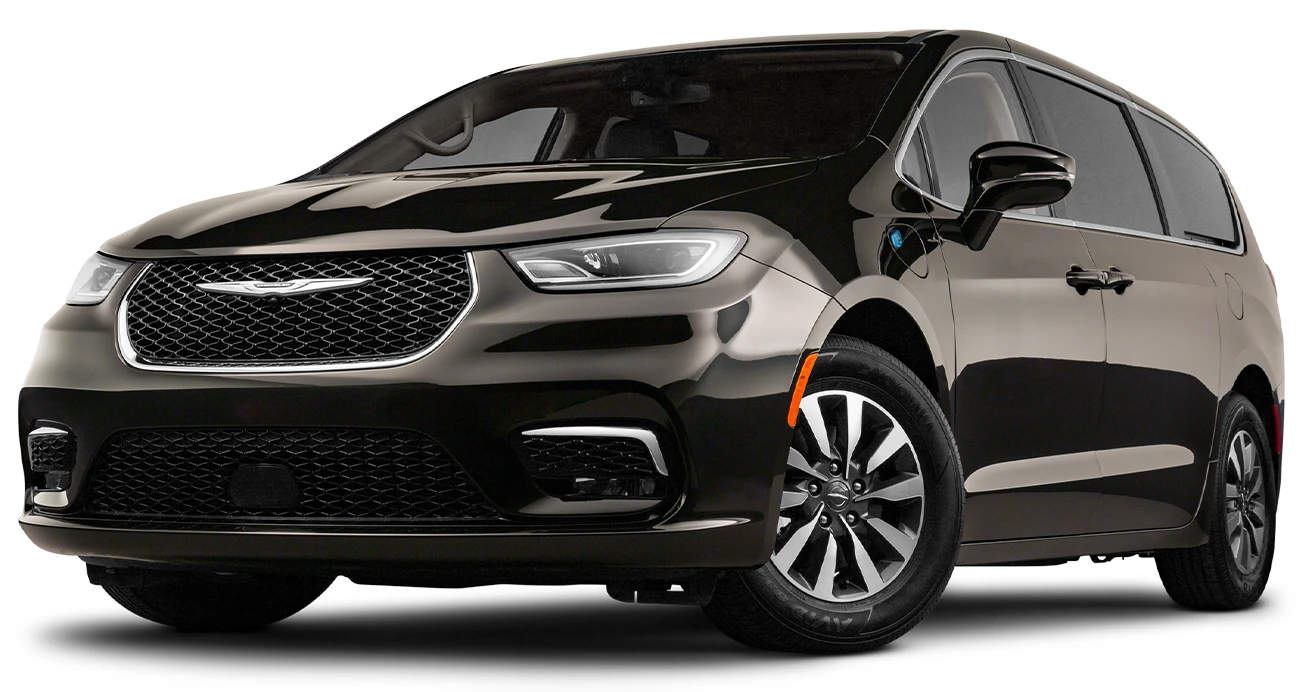
Chrysler introduced the Pacifica way back in 2017, first the gas-only model and then the plug-in hybrid version a few months later. The Pacifica brought with it a sleek and modern exterior, upscale-feeling interior, and numerous modern family-friendly features. In 2020, Chrysler added the option of all-wheel drive for buyers wanting extra traction in foul weather conditions, and in 2021 the Pacifica received a styling refresh.

Kia Carnival Basics
The Carnival replaces the Sedona in Kia's lineup, a minivan that had been part of Kia's fleet since the early 2000s. Introduced in 2022, the Carnival boasts styling that resembles an SUV. That theme continues inside with a traditional center console between the front seats instead of the more open arrangement on the Pacifica and other vans. The Kia also feels significantly high-tech with screens dominating the driver's view. However, unlike the Pacifica, it doesn't offer all-wheel drive, nor is a plug-in hybrid available.
Minivan Showdown
Chrysler and Kia have different ways of tackling the age-old minivan conundrum, but who does it better? Let's take a look at key features of each.

Passengers and cargo
Both of these vans put a high priority on interior space, and either can be equipped with seating for up to eight people. The driver and front passenger seats of both are comfortable, although the Kia has a slight edge in comfort. The second and third rows can easily fit adults, so kids are a snap. Speaking of which, families looking for the maximum number of child seats should know the Carnival has five spots with built-in child-seat anchors compared to the Pacifica's four.
Accessing the second and third rows is easy enough for both vans, but the Carnival has an edge here, too. The seatbelts for the second row anchor on the seats themselves, meaning it's easier to fold them out of the way to access the third row; in the Pacifica you have to make sure the belts are out of the way. In addition, while both have power-sliding side doors with a hands-free mechanism, the Kia's open by just standing next to the door for a few seconds with the key fob in your pocket. For the Pacifica, you have to wave your foot under just the right spot, which can be a little tricky with an armload of groceries.
On the other hand, the Pacifica has the advantage when it comes to cargo hauling. While both fold their third rows easily, the Kia requires you to remove the second-row seats entirely to maximize cargo space, and those things are HEAVY. On the other hand, the Pacifica boasts Chrysler's Stow 'N Go® second-row seats, which flip and fold down into a storage well in the floor. It's far easier than removing seats, and that storage well can be used as a hidden cargo space when the seats are in their upright position. The downside is that the second-row seats aren't quite as comfy or adjustable as what you'll get in the Kia, and Stow 'N Go isn't available on the Pacifica Hybrid.
Keith's take
Which minivan takes the prize here depends on your priorities. If you find yourself antiquing on the weekends or just needing to haul larger loads frequently, there's no doubt that the Pacifica's Stow 'N Go is a lifesaver, or at least better for your back when compared to lifting heavy seats in and out. On the other hand, most people buy minivans to haul people, and in that case, the Kia's comfier second-row seats win the day.
Engine choices
The Pacifica comes with a powerful V6 engine. It's also available with a plug-in hybrid, which Chrysler calls the Pacifica Hybrid. It can go an EPA-estimated 32 miles solely on electricity before the gas engine kicks in and gets better fuel economy the rest of the time to boot. If you're good about plugging in, that means significant savings at the pump. The Pacifica Hybrid's small battery can be charged overnight off a regular household 120-volt outlet with no special equipment required. It only seats seven and doesn't offer Stow 'N Go, but it compensates by having comfortable captain's chairs in the second row.
If you choose the standard gas engine, the Pacifica is available with all-wheel drive. It provides additional traction in foul weather when accelerating and reduces the chances of getting stuck. While it adds a little extra ground clearance, it's still low enough to the ground for little ones to climb in without much trouble.
As for the Carnival, you're locked into a V6 powering the front wheels. It's a good V6, with plenty of power, but it's all you get.
Keith's take
This is really no contest, and the Pacifica wins easily. It'd be nice if the all-wheel-drive system and plug-in hybrid could be paired, but that feels almost greedy to ask for.
One important caveat: We're looking at Carnival models from 2022 to 2024, but a refresh for 2025 included a new hybrid model. However, all-wheel drive remains unavailable for the Carnival, so the Pacifica still gets the nod here.
Family-friendly tech
Both vans offer up excellent audio systems, plenty of high-tech driver aids, and more USB ports than you could possibly have devices for. So let's take a look at how each manufacturer approaches technology for families.
Both vans offer a camera system so the driver and front passenger can keep an eye on what's going on in the second and third rows. Both also come with a pinch-and-zoom feature to help resolve territory disputes, and an intercom so you can say, rather than shout, "What's going on back there?" However, if the camera shows your little ones are asleep, a Quiet Mode on the Kia redirects audio to the front speakers only, something the Chrysler lacks.

Speaking of screens, the Kia's high-tech cockpit design deserves a mention. Available on the Carnival is a fully digital instrument panel, which blends with the 12.3-inch touchscreen for a nearly panoramic look. It's as high-tech as it looks, and it's easy to use as well. By contrast the Pacifica's traditional main gauges with a small digital information screen between them look dated, as does the 10.1-inch touchscreen in the middle of the dash. To be fair, the Chrysler system is fine, but there's no escaping the edge Kia has in visibility and ease of use.
However, the Pacifica's more traditional interior layout gives it an edge in small item storage. There's a large space under the center console, perfect for a purse or other bag. The Kia's SUV-inspired design is dash-to-floor, meaning there's no easy spot to just drop your bag within easy reach.
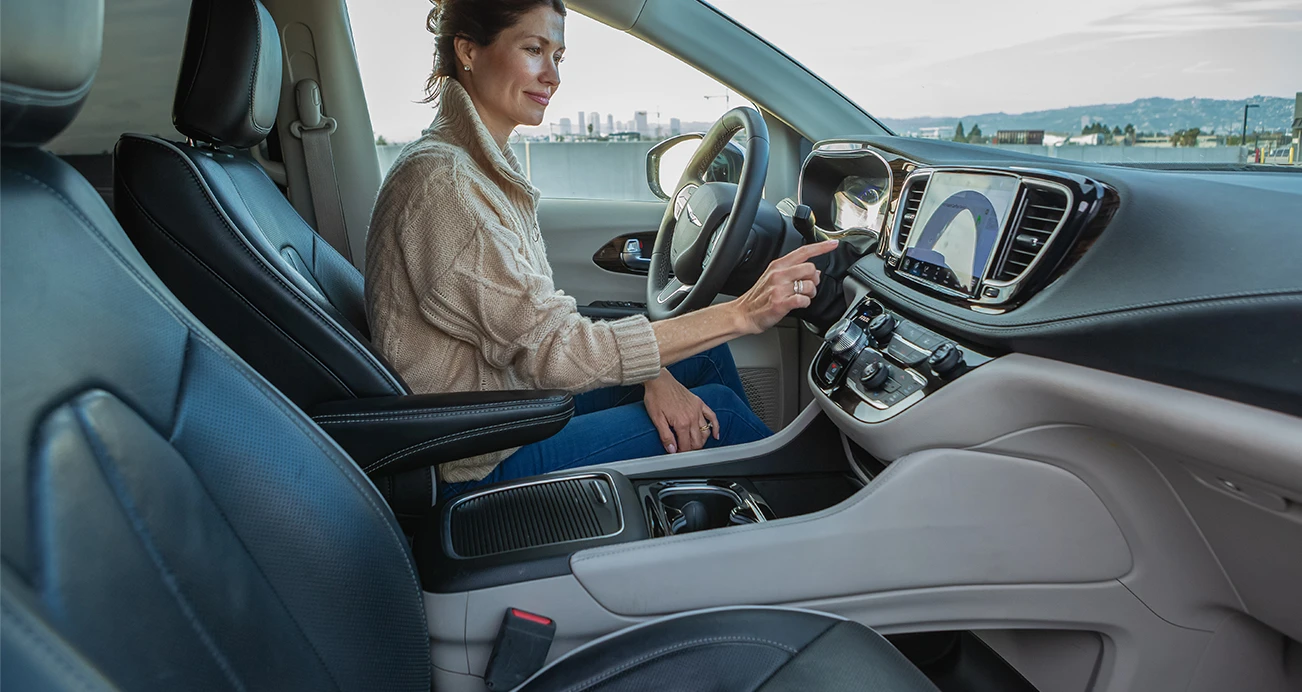
Both vans offer quite a bit of driver-assist tech. On one hand, the Pacifica offers more of it standard, meaning that even on low-end models you can get things like adaptive cruise control, blind-spot monitoring and more, while the Carnival makes you move up to higher trims. On the other hand, the Kia's systems are more sophisticated, such as the adaptive cruise control system that integrates with the navigation system. Still, there's something to be said for the Pacifica's egalitarian approach.
Keith's take
On one hand, the Kia definitely feels more advanced than the Pacifica, simply because it's newer. But Chrysler has done an admirable job of keeping up with the times, updating the Pacifica along the way to ensure it doesn't fall behind. Still, the nod goes ever so slightly to the Kia Carnival, with the caveat that Pacifica shoppers are unlikely to be disappointed.
Choose Carefully
Both of these vans are solid contenders, even if one of them has been around a lot longer than the other. At the end of the day, it depends on what you really want. If you need a minivan that uses little to no gas, or has all-wheel drive, or is a cargo-swallowing monster, the Pacifica is an obvious choice. But if you leave that aside the picture is murkier. The best advice is to bring the kids, including your car seats, and anything else you're likely to use on a daily basis when you go shopping and see how each minivan works for your specific needs.

Keith Buglewicz has worked in the automotive industry since 1994, writing thousands of car-related articles, and he's tested and reviewed hundreds of vehicles over the course of his career. Keith is the managing editor of CarMax at Edmunds, and his byline can be found at KBB, MotorTrend, Autobytel and many others. Keith considers himself exceptionally lucky to be working the dream job he’s had since high school. See Edmunds' testing procedures that power our industry-leading car reviews.