

Hatchbacks Buying Guide
What are Hatchbacks?
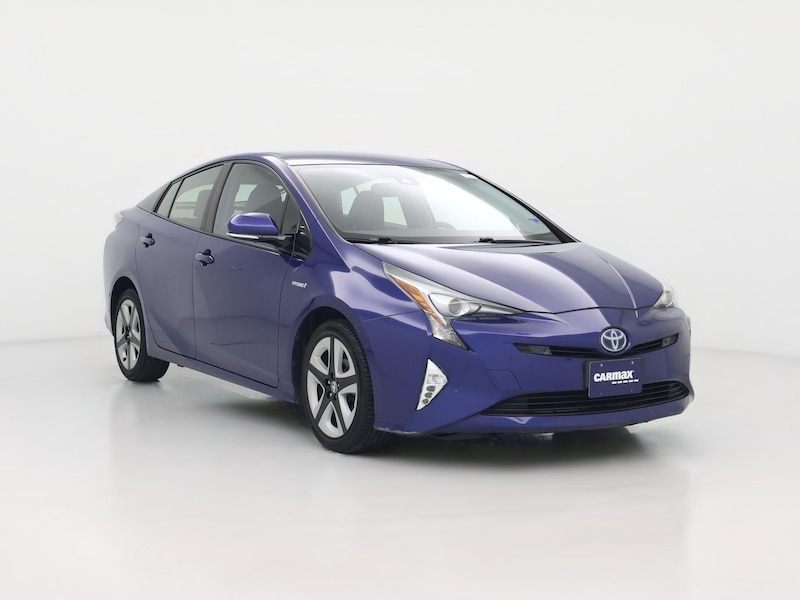
Hatchbacks are cars with a rear liftgate (sometimes called a “fifth door”) that opens into a shared cargo area behind the rear seats, making loading easier than in a traditional trunk. Many have a small footprint for city driving, and most offer fold-down rear seats to expand space for longer or larger items. From commuter-friendly options like the Honda Civic to hybrid models such as the Toyota Prius, hatchbacks are built for everyday versatility without the bulk of an SUV.
Benefits of Owning a Used Hatchback

A hatchback’s large trunk opening makes it easier to load and carry groceries, luggage, flat-pack furniture, dog crates — you name it. And because the cabin and cargo area connect, you often get more usable space than you’d expect from a smaller vehicle.
Wide hatch opening for quick access
Rear seats fold to expand cargo space
Easier bulky-item maneuvering
Lower liftover on many models
Practical space for everyday stuff

Hatchbacks tend to be shorter and easier to maneuver, which is useful for tight parking lots and busy streets. Even though many hatchbacks may appear small on the outside, they’re actually quite roomy, making them great daily drivers. They’re also a nice middle ground if an SUV feels oversized, but a sedan feels limiting.
Easier parking
Better visibility in tight areas
Light steering with a nimble feel
Great for urban commutes
Less intimidating to drive

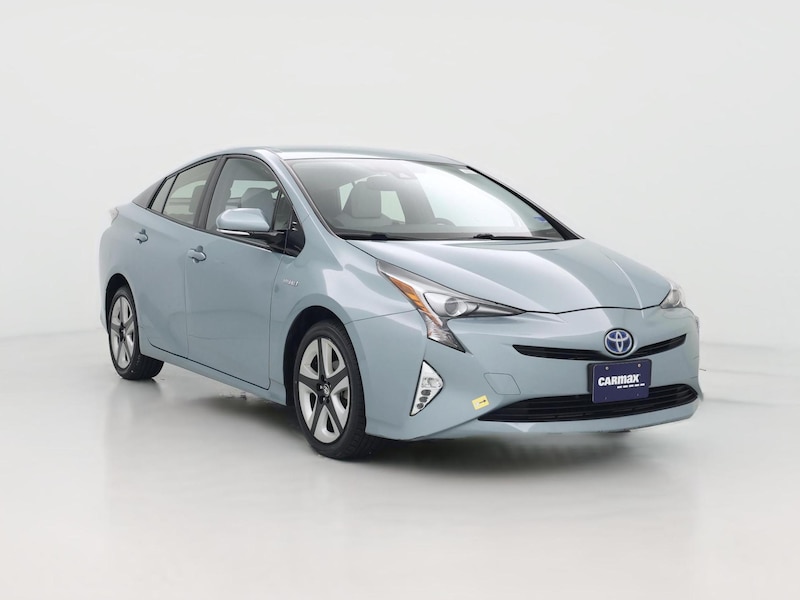
The small size and light weight of many hatchbacks mean they’re relatively fuel-efficient too. For example, the 2023 Toyota Prius hybrid gets an EPA-estimated 57 mpg combined, while the 2020 Honda Fit with its 1.5L engine gets an EPA-estimated 33 mpg combined. If you’re watching running costs, hatchbacks are a sensible place to start.
Strong mpg from compact models
Hybrid options widely available
Fewer fuel stops each week
Often lower operating costs
Great for high-mile commutes

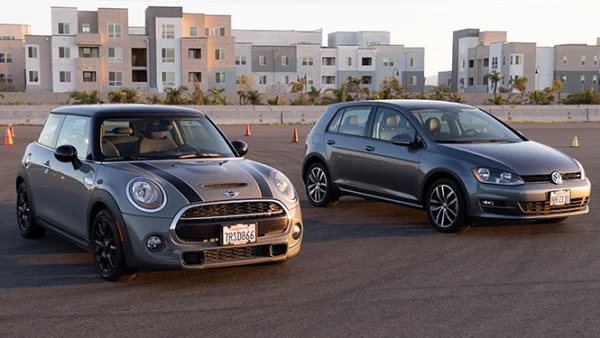
Hatchbacks aren’t all geared toward fuel economy. The same shape that makes them practical can also make them genuinely enjoyable, especially sporty hot hatch variants built for spirited driving (the Volkswagen GTI, for example). Even non-performance trims often feel responsive because the cars are lighter and easier to handle with a shorter wheelbase than a sedan.
Lively handling on backroads
Available sporty trims
Manual transmission options in some models
Balanced feel at speed
Practical without feeling boring
How to choose a used hatchback

Think about what you want to do with your car—hatchbacks make a great daily driver, but the right one depends on passengers, cargo, pets, and parking. If you’re regularly hauling people, check rear-seat space and door access. If you’re hauling stuff, check cargo shape as well as space.
Daily errands vs road trips
Kids, friends, rear-seat needs
Parking constraints at home or work

Hatchbacks can be a smart choice, but you need to consider the total cost of ownership alongside the purchase price. When setting a budget, start with the price of the car (or your maximum monthly payment), then work backwards: how much can you comfortably put down, and how does that change with insurance, fuel, and maintenance costs?
Set a monthly payment ceiling
Estimate weekly fuel spend
Budget for maintenance and tires

With such a wide range of options out there, take a moment to decide which features are most important to you. Do you need driver-assistance tech, heated seats, or smartphone integration? This might determine the year of the vehicle you go for, as well as the trim. Once you’ve narrowed down your shortlist, compare vehicles and trims to make sure you’re able to find the right version of the car you want. Consider the following:
Driver aids
Infotainment and phone pairing
Comfort features you’ll notice
Compare Used Hatchbacks
The Civic is sporty and versatile, while the Prius offers hybrid performance. If you are focused on fuel economy, consider the Prius, but if you’re after a livelier drive, the Civic might be the better choice.
Honda Civic Advantages
More engaging driving feel
Sporty trims available
Broad used selection
Toyota Prius Advantages
Excellent fuel economy
Proven hybrid reputation
Calm, easy commuting
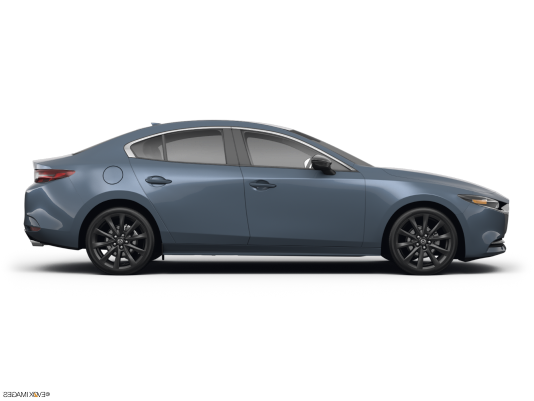
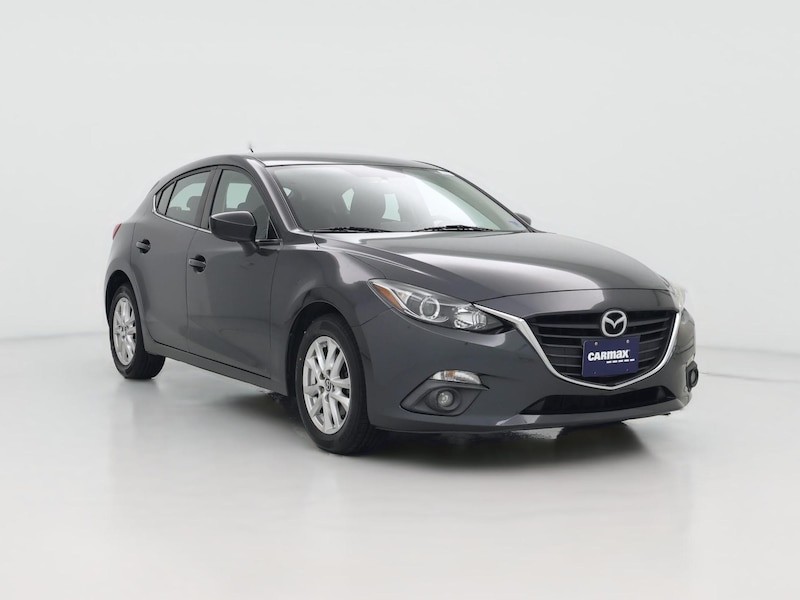
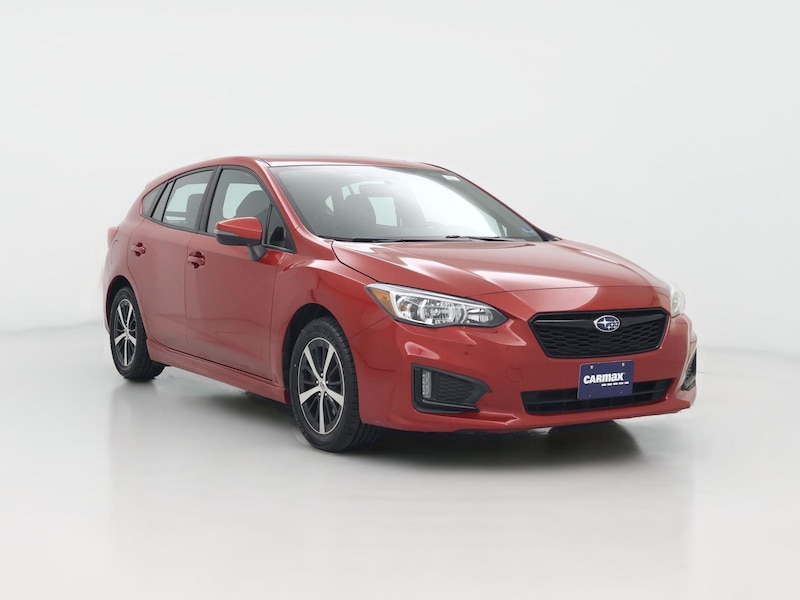
The Mazda3 has a premium-feeling cabin and sharp road manners, while the Impreza offers standard AWD. The Mazda3 makes a great commuter car, while the Impreza might be better if you want the added grip of AWD.
Mazda Mazda3 Advantages
Upscale interior
Sporty, responsive steering
Pleasing design inside and out
Subaru Impreza Advantages
All-wheel drive
Confident handling
Sporty good looks
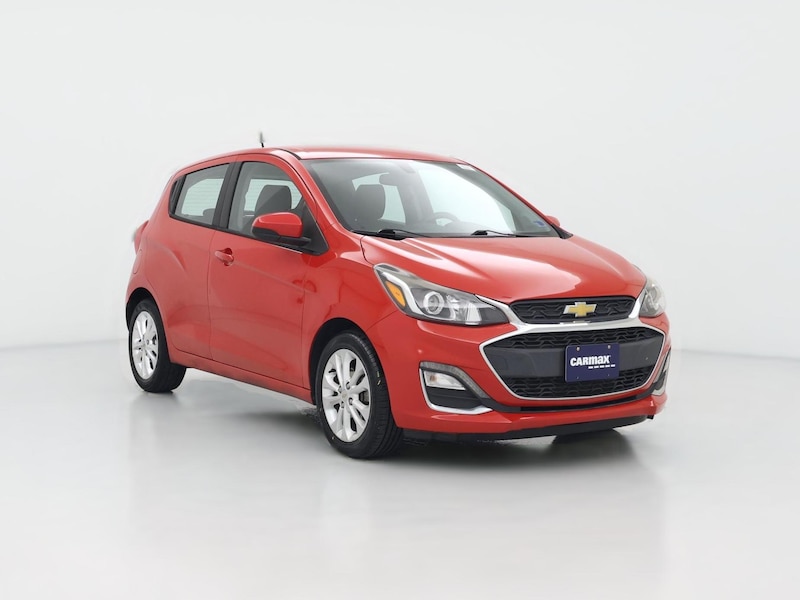
The Honda Fit has a small footprint, but it’s pleasingly spacious inside. The Chevrolet Spark is smaller but might suit you if you regularly navigate tight streets and parking lots.
Honda Fit Advantages
Flexible cargo and seating
Great for city driving
Practical daily driver
Chevrolet Spark advantages
Great commuter car
Tiny footprint for parking
Simple, straightforward controls
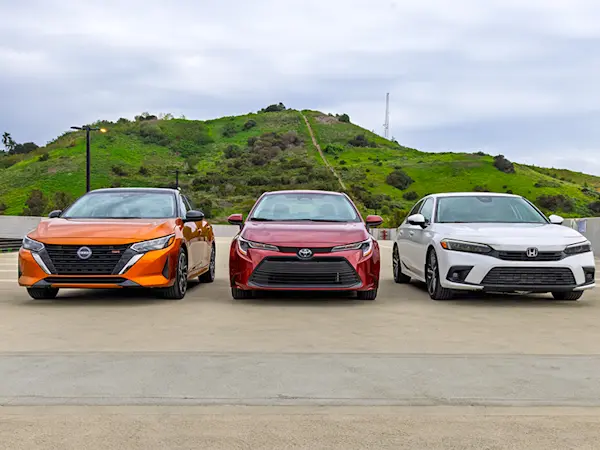
These are two practical hatchbacks that are great for daily driving. The Civic tends to feel sportier, while the Corolla is more focused on efficiency.
Honda Civic advantages
More driver-focused feel
Sporty trims available
Strong resale popularity
Toyota Corolla advantages
More focused on fuel economy
Comfortable daily driving
Easy ownership experience
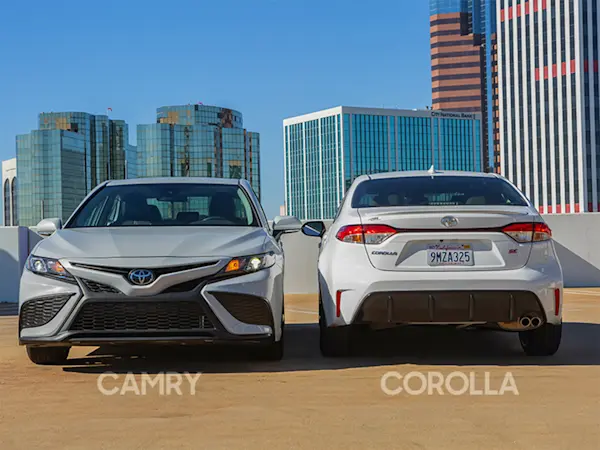
The Toyota Corolla is a great commuter car with a focus on thrifty performance. The Impreza, on the other hand, is a great companion if you regularly drive on wet or snowy roads thanks to its standard AWD.
Subaru Impreza advantages
AWD for wet-weather confidence
Hatchback-first practicality
Good visibility and control
Toyota Corolla advantages
Versatile for daily use
Engine options focused on economy
Huge model-year selection
Want to compare different hatchbacks (and trims) side-by-side?
Compare used hatchbacksHatchback Types
Compact hatchbacks are the easiest to live with in tight spaces. They’re typically the most affordable hatchback type, and they’re ideal for commuters, new drivers, and anyone who wants simple practicality without a big footprint.
Key Features
Easy to park anywhere
Efficient, low running costs
Surprisingly useful cargo space
Great city visibility
Popular models
Midsize hatchbacks (often also called liftbacks or sportbacks) give you more cabin room and a more refined highway feel, while keeping the easy-loading hatch. This is where you’ll find more comfort features and, sometimes, more power.
Key Features
More rear-seat comfort
Larger cargo area shape
More tech available by trim
Better long-drive refinement
Popular models
Toyota Prius, Buick Regal Sportback, Kia Stinger
Large hatchbacks usually offer more performance, more luxury, and more space, usually with a liftback that makes them far more usable than a traditional big sedan. They’re ideal if you want a premium daily driver that still swallows luggage.
Key Features
Strong performance and comfort
Big liftgate for loading
Premium interiors and tech
Great road-trip capability
Popular models
Best-selling Used Hatchbacks
Check out CarMax's best-selling used hatchbacks.
We've compiled the 10 most popular used hatchbacks with CarMax customers, covering a broad range of styles and prices. Learn more about how we ranked our list.
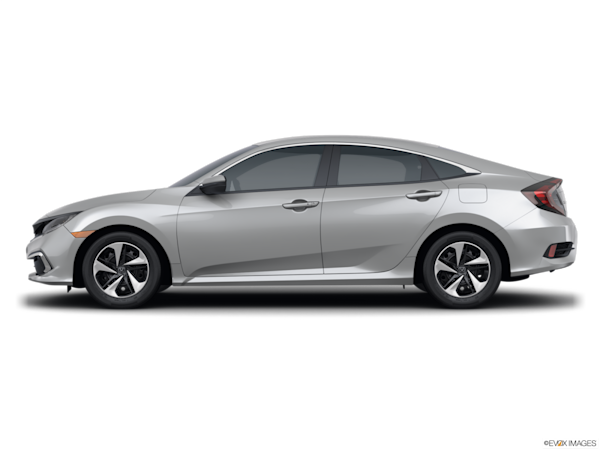
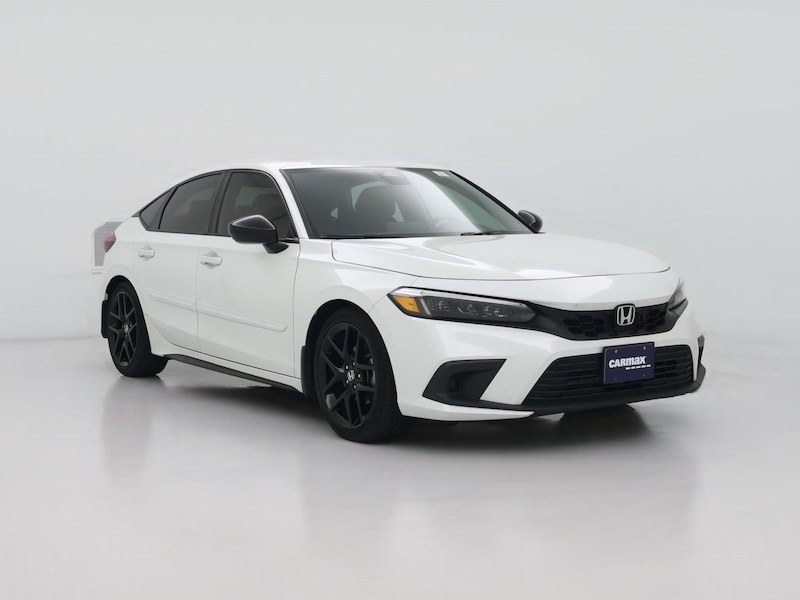
1. Honda Civic
CarMax owner rating
Pros
Engaging driving experience
Spacious, comfortable interior
Plenty of standard driver-assistance features
Cons
LX base trim is on only available in the sedan body style
Audible road noise at highway speeds
Slopping roof affects rear-seat headroom for taller passengers
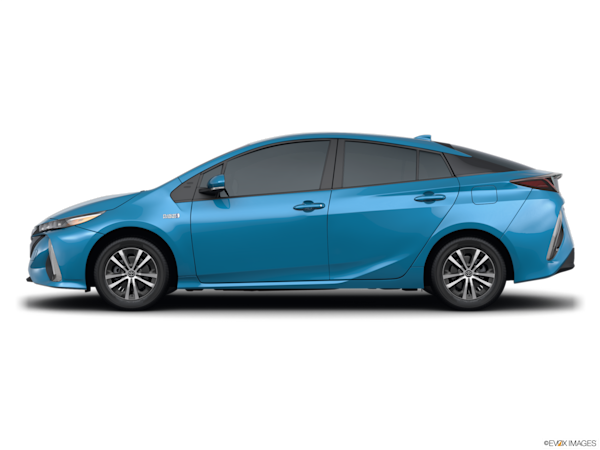
2. Toyota Prius
CarMax owner rating
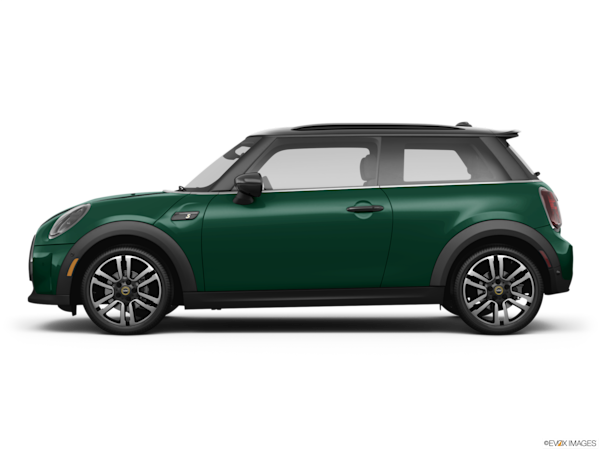
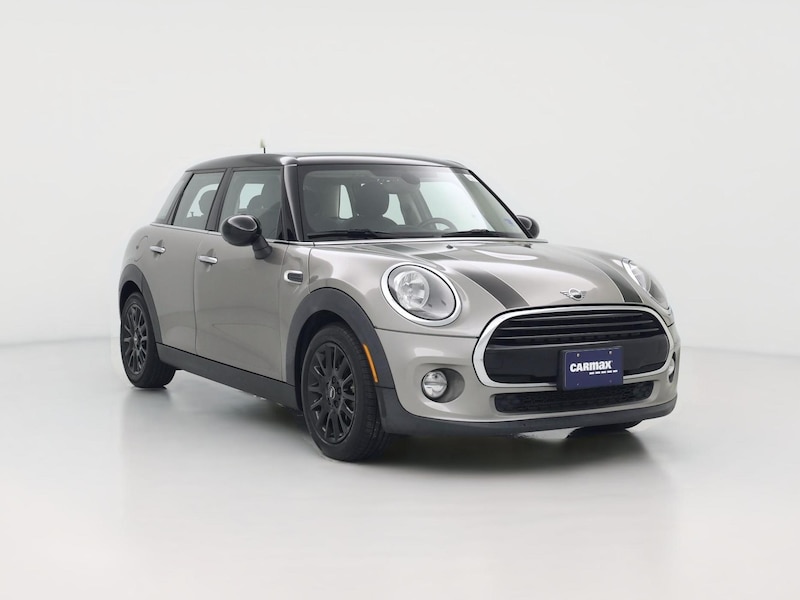
3. Mini Cooper Hardtop
CarMax owner rating
FAQs about hatchbacks
Often, hatchbacks are better because the hatch opening is larger and the cargo area is easier to access for crates, ramps, and cleanup. The best choice depends on your dog’s size and how you secure them (harness or crate). For a deeper checklist, take a look at this article on what dog owners need to consider when shopping.
Most SUVs have a rear liftgate, but “hatchback” usually refers to a car-based body style with a shared cabin-and-cargo space and a shorter overall shape. SUVs are typically taller, heavier, and built around different priorities (ground clearance, seating height, space).
A sedan typically has a separate trunk with a smaller opening, while a hatchback uses a rear liftgate that opens into the cargo area behind the seats. That usually means easier loading and more flexible space when seats fold down.
Not always. Many hatchbacks have folding rear seats, but whether they fold fully flat — and how much cargo length you gain — varies by model year and trim. If that’s a dealbreaker, verify the exact configuration using our car comparison tool before you buy.
Because the rear hatch counts as a door. Most hatchbacks have four passenger doors plus the liftgate, which creates the “fifth door” label. You’ll also see three-door hatchbacks (two side doors plus the hatch), depending on the model.
You can think of wagons as stretched out hatchbacks; or of hatchbacks as scrunched up wagons. They typically have a large trunk opening, referred to as a hatch, liftback, or fifth-door, but wagons are generally more than 20 inches longer than hatchbacks. A wagon's length gives it the sleek proportions that differentiate it from other vehicle types.
A hot hatch is essentially a sporty hatchback. Examples include the Volkswagen Golf GTI and Hyundai Veloster N. If you're looking for the increased storage of a hatchback without compromising on spirited driving, this category is for you.
Research used hatchback models
Learn more about hatchbacks


Ready to find your hatchback?
How we ranked these vehicles
Our "Best of" lists represent the most popular vehicles with CarMax customers. To create the Best lists, our analysts look at CarMax vehicle and sales data over a recent 6-month period and rank the top selling vehicles in order. Looking back over a 6-month period allows for the highest sample size possible while also providing up-to-date pricing information. Each list includes the specific dates used when it was generated. Some articles may include data points with lower sample sizes.
To create our "Most Reliable" lists, our analysts pull the top most reliable vehicles—in order—according to RepairPal rankings. RepairPal Reliability Ratings are based on the actual cost, frequency, and severity of unscheduled repairs and maintenance on make/model data for select 2006-2020 vehicles. The reliability of a specific vehicle may vary depending on its maintenance and driving history, model year, trim, and features. RepairPal Reliability Ratings are provided by RepairPal and CarMax is not responsible for their accuracy. Learn more about RepairPal reliability ratings.
We hope you found this information helpful. This content is intended to inform and is not meant to provide legal, financial or investment advice. We make every effort to provide accurate information, but please verify before transacting and consider talking to a qualified professional about your unique circumstances.
Statements of fuel economy or EV range are based on EPA and other third-party estimates for vehicles when new. Fuel economy and EV range will degrade with time and vary based on age, driving conditions, vehicle history, and other conditions. See fueleconomy.gov for more info.
Unless otherwise noted, information related to featured vehicles comes from third-party sources, including manufacturer information. Product and company names may be trademarks or registered trademarks of third-party entities. Use of them does not imply any affiliation with or endorsement by these entities.